Quotessence
Home / Quotes / Quote by Gerry Spence

Quote by Gerry Spence

Work

Author

Gerry Spence
Gerry Spence

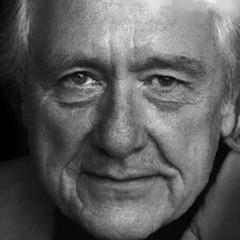
Gerry Spence is an American lawyer renowned for his defense skills in criminal trials. Born on January 8, 1929, he is a widely influential figure in the legal community. more

You May Also Like

“The world isn’t always what’s right in front of you, you know? It’s below, it’s above, it’s out there somewhere. Every burn of every light inside every house I see when I look down from the rooftop has a story. Sometimes we just need to change our perspective. And when I look down at everything, I remember that there’s more out there than just what’s going on in my house—the bullshit with my dad, school, my future. I look at all those full houses, and I remember, I’m just one of many. It’s not to say we’re not special or important, but it’s comforting, I guess. You don’t feel so alone.”

“I have so much knowledge tucked away about how to protect yourself, for even if you are an empath full of peace and love, you sometimes have to become a warrior, for often it is a fight between the darkness and the light. I think if you saw me today, you would not see the scars but a caring, loving person.”

“The word “empath” jumped up in my awareness a few years after I had already been in the States. When I first came across it, it felt so woo-woo and new-agey that the “normal” part of me balked at it. It was hard enough to own being a Highly Sensitive Person, words that had research backing them. But this empath thing, this was taking it even a step further. It veered off into ambiguous, questionable territory.  In fact, when I had first stumbled across the word online, trying to find a way to understand a part of my sensitivity that being an HSP didn’t quite encapsulate, I hadn’t even thought that it could possibly have anything to do with me. But the more I listened to other people’s stories, the more I followed the breadcrumbs, the more it started feeling that although the words that people used to describe their empath experiences were foreign, what they were talking about was essentially my own experience. It was just that some of these people connected that experience to belief systems I didn’t always resonate with while some others wrapped up the word in explanations that felt like the making up of a false story. But slowly, I could see that at the heart of it, beyond the cloak of words, beyond the different interpretations that people gave, our experiences felt similar. Like these so-called empaths, I often felt flooded with other people’s feelings. Their curiosity, worry and frustration jumped out at me. This often made me feel like I was walking through emotional minefields or collecting new feelings like you would collect scraps of paper. Going back to India after moving to the States, each time, I was stuck by how much all the little daily interactions, packed tightly in one day, which were part of my parents’ Delhi household, affected me energetically. Living in suburban America, I had often found the quiet too much. Then, I had thought nostalgically about India. Weeks could pass here without anyone so much as ringing the bell to our house. But it seemed like I had conveniently forgotten the other side of the story, forgotten how overstimulating Delhi had always been for me.  There was, of course, the familiar sensory overload all around -- the continuous honking of horns, the laborers working noisily in the house next door, the continuous ringing of the bell as different people came and went -- the dhobi taking the clothes for ironing, the koodawalla come to pick up the daily trash, the delivery boy delivering groceries from the neighborhood kiraana store. But apart from these interruptions, inconveniences and overstimulations, there was also something more. In Delhi, every day, more lives touched mine in a day than they did in weeks in America. Going back, I could see, clearly for the first time, how much this sensory overload cost me and how much other people’s feelings leaked into mine, so much so that I almost felt them in my body. I could see that the koodawalla, the one I had always liked, the one from some kind of a “lower caste,” had changed in these past few years. He was angry now, unlike the calm resignation, almost acceptance he had carried inside him before. His anger seemed to jump out at me, as if he thought I was part of a whole tribe of people who had kept people like him down for years, who had relegated him to this lower caste, who had only given him the permission to do “dirty,” degrading work, like collecting the trash.”