“Yet only the economic in the narrow sense will allow us to get beyond the economic. By redeploying the resources capitalism has so considerately stored up for us, socialism can allow the economic to take more of a backseat. It will not evaporate, but it will become less obtrusive. To enjoy a sufficiency of goods means not to have to think about money all the time. It frees us for less tedious pursuits. Far from being obsessed with economic matters, Marx saw them as a travesty of true human potential. He wanted society where the economic no longer monopolised so much time and energy. That our ancestors should have been so preoccupied with material matters is understandable. When you can produce only a slim economic surplus, or scarcely any surplus at all, you will perish without ceaseless hard labour. Capitalism, however, generates the sort of surplus that really could be used to increase leisure on a sizeable scale. The irony is that it creates this wealth in a way that demands constant accumulation and expansion, and thus constant labour. It also creates it in ways that generate poverty and hardship. It is a self-thwarting system. As a result, modern men and women, surrounded by an affluence unimaginable to hunter-gatherers, ancient slaves or feudal serfs, end up working as long and hard as these predecessors ever did. Marx's work is all about human enjoyment. The good life for him is not one of labour but of leisure.”
Quote by Terry Eagleton
Book:Why Marx Was Right
Work
Why Marx Was Right
This book delves into the enduring significance of Karl Marx's political and economic theories, analyzing their impact on modern political and social issues. more
Author
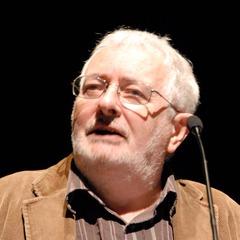
Terry Eagleton
Terry Eagleton is a renowned British literary critic, known for his research on Marxist literary theory. His work spans a wide range of literary and theoretical topics, influencing cultural studies and political commentary as well. more
You May Also Like
Source: A Little Life
Source: The Constitution of Liberty
Source: Human Acts
Source: A Boy Called Christmas
Source: القرآن الكريم
“The only reason the world was a better place during your childhood is because you were a child.”
“Harmony between society and nature can be obtained.”
Source: The Magic of Nature: Meditations & Spells to Find Your Inner Voice
“A nation is nothing more than a large network of communities.”
Source: The Magic of Nature: Meditations & Spells to Find Your Inner Voice
“Every nation has its struggles, but when the people come together, they are at their best.”
Source: The Magic of Nature: Meditations & Spells to Find Your Inner Voice
Source: The Vegetarian