Quotessence
Home / Quotes / Quote by Richard Dawkins

Quote by Richard Dawkins

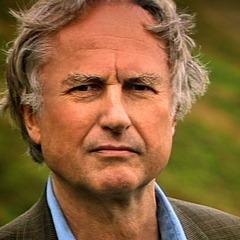
“That scientifically savvy philosopher Daniel Dennett pointed out that evolution counters one of the oldest ideas we have: 'the idea that it takes a big fancy smart thing to make a lesser thing. I call that the trickle-down theory of creation.”

Quote by Richard Dawkins

Work

The God Delusion

This book delves into the arguments for and against the existence of a deity, exploring scientific evidence, historical context, and philosophical reasoning. The author critically analyzes various religious beliefs and their implications on society and science. more

Author

Richard Dawkins
Richard Dawkins

Richard Dawkins is a British ethologist, writer, and thinker, known for his contributions to evolutionary theory, particularly in the field of modern synthesis. He is widely recognized for his best-selling book 'The Selfish Gene', which explains the central role of genes in biological evolution. Dawkins has made significant impacts in the field of science communication and has sparked widespread discussions about human behavior and morality. more

You May Also Like

“McGrath briefly notes Bertrand Russell's Why I am not a Christian, and J. J. C. Smart gets a single mention, as does Adolf Grünbaum, but the other major defenders of philosophical atheism of the last half-century do not even merit a nod. His index contains no listings for Antony Flew, Wallace Matson, Kai Nielsen, Richard Gale, William L. Rowe, Michael Martin, J. L. Mackie, Daniel Dennett, Evan Fales, Michael Tooley, Quentin Smith, Jordan Howard Sobel, Robin Le Poidevin, Theodore Drange, Walter Sinnott-Armstrong, Nicholas Everitt, J. L. Schellenberg, or Graham Oppy.”

“What I should have said is that he thinks that there is a conflict between evolutionary biology and theism. Dennett thinks that evolutionary theory shows that it is irrational to believe that God exists; he thinks that the theory has this consequence because he thinks that the Design Argument was the only remotely plausible argument for God’s existence and evolutionary theory destroyed that argument.”

“At one conference Hameroff told Dennett, publicly, "You know, Dan, maybe the reason you like this [mechanistic] idea is because you're a zombie. And maybe the reason I see things differently is because, I'm not." Hameroff told me he was half-joking. But Dennett took offense. "I wound up apologizing," says Hameroff. "I guess he only likes the idea of being a zombie if we're all zombies.”

“The waitress gave Dale the stink eye while collecting his discarded food and drink. While she performed the removal, Dale read the text on her shirt. I’VE MASTERED MY SHIT, SO IF WE’RE ARGUING DURING MERCURY RETROGRADE, YOU’RE THE ONE BEING A BITCH, NOT ME. I’M ENLIGHTENED, ASSHOLE.”

“How To Make A Human Take the cat out of the sphinx and what is left? Riddle Me That. Take the horse from the centaur and you take away the sleek grace, the strength of harnessed power. What is left can still run across fields, after a fashion, but is easily winded; what is left will therefore erect buildings to divide the open plains so he no longer must face the wide expanse where once his equine legs raced the winds and, sometimes, won. Take the bull from the Minotaur but what is left will still assemble a herd for the sake of ruling over it. What is left will kill for sport, in an arena thronged with spectators shouting "Ole" at each deadly thrust. Take the fish from the Merman: What is left can still swim, if only with lots of splashing; gone is the sleek sliding through the waves, alert to the subtle changes in the current. What is left will build ships so he can cross the oceans without getting his feet wet, what is left won't care if his boats pollute the seas he can no longer breathe so long as their passage can keep him from sinking. Take the goat from the satyr but what is left will dance out of reach before you have the chance to get that Dionysian streak of myschief, the love of music and wine, the rutting parts that like to party all the day through. What is left will still be stubborn and refuse to give way; what is left will lock horns and butt heads with anyone who challenges him. Take the bird from the harpy, but the memory of flying, a constant yearning ache for skies so tantalizingly distant, will still remain, as will the established pecking orders, the bitter squabbling over food and territory, and the magpie eye that lusts for shining objects. What is left will cut down the whole forest to feather his sprawling urban nest. At the end of these operations, tell me: what is left? The answer: Man, a creature divorced from nature, who's forgotten where he came from.”