“The outermost reach of fascist radicalization was the Nazi murder of the Jews. No mere prose can do justice to the Holocaust, but the most convincing accounts have two qualities. For one, they take into account not only Hitler’s obsessive hatred of Jews but also the thousands of subordinates whose participation in the increasingly harsh actions against them that made the mechanism function. Without them, Hitler’s murderous fantasy would have remained only a fantasy. The other quality is the recognition that the Holocaust developed step by step, from lesser acts to more heinous ones. Most scholars accept today that the Nazi assault upon the Jews developed incrementally. It grew neither entirely out of the disorderly local violence of a popular pogrom, nor entirely from the imposition from above of a murderous state policy. Both impulses ratcheted each other up in an ascending spiral, in a way appropriate to a “dual state.” Local eruptions of vigilantism by party militants were encouraged by the language of Nazi leaders and the climate of toleration for violence they established. The Nazi state, in turn, kept channeling the undisciplined initiatives of party militants into official policies applied in an orderly fashion. The first phase was segregation: marking the internal enemies, setting them apart from the nation, and suppressing their rights as citizens. . . .Segregation reached its climax with the marking of the Jewish population. First in occupied Poland in late 1939 and then in the Reich in August 1941, all Jews had to wear a yellow Star of David sewn to the chest of their external garments. By this time, the next phase—expulsion—had already begun. The policy of expulsion germinated in the mixture of challenge and opportunity presented by the annexation of Austria in March 1938. This increased the number of Jews in the Reich, and, at the same time, gave the Nazis more freedom to deal harshly with them. The SS officer Adolf Eichmann worked out in Vienna the system whereby wealthy Jews, terrorized by Nazi thugs, would pay well for exit permits, generating funds that could be applied to the expulsion of the others.”
Quote by Robert O. Paxton
Work
The Anatomy of Fascism
This book delves into the political ideology of fascism, examining its roots, key features, and the ways it has influenced societies and governments throughout history. more
Author
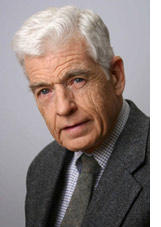
Robert O. Paxton
Robert O. Paxton is a renowned American historian known for his research on 20th-century European history, particularly the history of France. His works delve into the historical background of totalitarianism and racism, significantly influencing the understanding of modern political and social movements. more
You May Also Like
Source: Altes Land
Source: One State, Two States: Resolving the Israel/Palestine Conflict
Source: Transcendent Kingdom
“It's the odious, insufferable people who usually get to the top.”
Source: A Song Begins
Source: Beyond the Faerie Gate
Source: Autoportrait
Source: Making Hearts
“There is nothing more painful in this world, than to be in love with something that can never be.”
Source: Profound Reverie