Quotessence
Home / Authors / Adam Smith
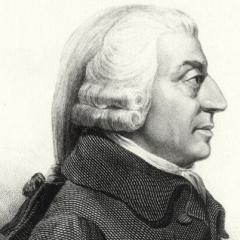
Adam Smith

Adam Smith Quotes

Philosopher

Filter quotes by topic

Famous Adam Smith Quotes

“The subjects of every state ought to contribute toward the support of the government, as nearly as possible, in proportion to their respective abilities; that is, in proportion to the revenue which they respectively enjoy under the protection of the state ....As Henry Home (Lord Kames) has written, a goal of taxation should be to 'remedy inequality of riches as much as possible, by relieving the poor and burdening the rich.'”

“The interest of [businessmen] is always in some respects different from, and even opposite to, that of the public ... The proposal of any new law or regulation of commerce which comes from this order ... ought never to be adopted, till after having been long and carefully examined ... with the most suspicious attention. It comes from an order of men ... who have generally an interest to deceive and even oppress the public.”

“Such regulations may, no doubt, be considered as in some respect a violation of natural liberty. But those exertions of the natural liberty of a few individuals, which might endanger the security of the whole society, are, and ought to be, restrained by the laws of all governments; of the most free, as well as or the most despotical. The obligation of building party walls, in order to prevent the communication of fire, is a violation of natural liberty, exactly of the same kind with the regulations of the banking trade which are here proposed.”

“People of the same trade seldom meet together, even for merriment and diversion, but the conversation ends in a conspiracy against the public, or in some contrivance to raise prices. It is impossible indeed to prevent such meetings, by any law which either could be executed, or would be consistent with liberty or justice. But though the law cannot hinder people of the same trade from sometimes assembling together, it ought to do nothing to facilitate such assemblies; much less to render them necessary.”

“Consumption is the sole end and purpose of all production; and the interest of the producer ought to be attended to only so far as it may be necessary for promoting that of the consumer. The maxim is so perfectly self-evident that it would be absurd to attempt to prove it. But in the mercantile system the interest of the consumer is almost constantly sacrificed to that of the producer; and it seems to consider production, and not consumption, as the ultimate end and object of all industry and commerce.”

“To hinder, besides, the farmer from selling his goods at all times to the best market, is evidently to sacrifice the ordinary laws of justice to an idea of public utility, to a sort of reasons of state; an act of legislative authority which ought to be exercised only, which can be pardoned only in cases of the most urgent necessity.”

“The statesman who should attempt to direct private people in what manner they ought to employ their capitals would not only load himself with most unnecessary attention but assume an authority which could safely be trusted to no council and senate whatever, and which would nowhere be so dangerous as in the hands of man who have folly and presumption enough to fancy himself fit to exercise it.”