Quotessence
Home / Quotes / Quote by Adam Smith

Quote by Adam Smith

Work

An inquiry into the nature and causes of the wealth of nations

This classic text delves into the principles of economics, analyzing the production, distribution, and consumption of goods and services, and their impact on economic growth and societal welfare. more

Author
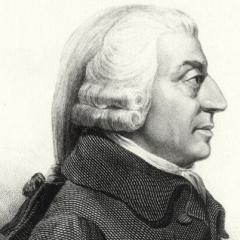
Adam Smith
Adam Smith

Adam Smith, a renowned philosopher and economist from Britain, was born on June 5, 1723, and died on July 17, 1790. Known as the father of modern economics, his work 'The Wealth of Nations' had a profound impact on the development of economics. more

You May Also Like

“It is the interest of every man to live as much at his ease as he can; and if his emoluments are to be precisely the same, whether he does or does not perform some very laborious duty, it is certainly his interest, at least as interest is vulgarly understood, either to neglect it altogether, or, if he is subject to some authority which will not suffer him to do this, to perform it in as careless and slovenly a manner as that authority will permit.”

“The greatest improvement in the productive powers of labour, and the greater part of the skill, dexterity, and judgment with which it is anywhere directed, or applied, seem to have been the effects of the division of labour.”

“I am always willing to run some hazard of being tedious, in order to be sure that I am perspicuous; and, after taking the utmost pains that I can to be perspicuous, some obscurity may still appear to remain upon a subject, in its own nature extremely abstracted.”

“The annual labour of every nation is the fund which originally supplies it with all the necessaries and conveniencies of life which it annually consumes, and which consist always either in the immediate produce of that labour, or in what is purchased with that produce from other nations.”

“The value of any commodity, therefore, to the person who possesses it, and who means not to use or consume it himself, but to exchange it for other commodities, is equal to the quantity of labour which it enables him to purchase or command. Labour, therefore, is the real measure of the exchangeable value of all commodities. The real price of everything, what everything really costs to the man who wants to acquire it, is the toil and trouble of acquiring it.”

“Such regulations may, no doubt, be considered as in some respect a violation of natural liberty. But those exertions of the natural liberty of a few individuals, which might endanger the security of the whole society, are, and ought to be, restrained by the laws of all governments; of the most free, as well as or the most despotical. The obligation of building party walls, in order to prevent the communication of fire, is a violation of natural liberty, exactly of the same kind with the regulations of the banking trade which are here proposed.”

“When the toll upon carriages of luxury, upon coaches, post-chaises, etc. is made somewhat higher in proportion to their weight, than upon carriages of necessary use, such as carts, wagons, etc. the indolence and vanity of the rich is made to contribute in a very easy manner to the relief of the poor, by rendering cheaper the transportation of heavy goods to all the different parts of the country.”