“I am always willing to run some hazard of being tedious, in order to be sure that I am perspicuous; and, after taking the utmost pains that I can to be perspicuous, some obscurity may still appear to remain upon a subject, in its own nature extremely abstracted.”
Quote by Adam Smith
Work
The Wealth of Nations: An Inquiry Into the Nature and Causes of the Wealth of Nations: With an introduction by Jonathan B. Wight, University of Richmond
Written by Adam Smith, 'The Wealth of Nations' is a foundational text in the field of economics. It delves into the nature and causes of wealth, offering insights into the development of economies. The book is accompanied by an introduction by Jonathan B. Wight, providing additional context and analysis. more
Author
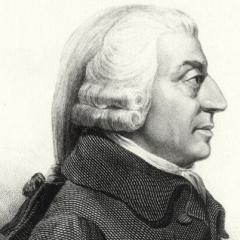
Adam Smith
Adam Smith, a renowned philosopher and economist from Britain, was born on June 5, 1723, and died on July 17, 1790. Known as the father of modern economics, his work 'The Wealth of Nations' had a profound impact on the development of economics. more
You May Also Like
Source: An inquiry into the nature and causes of the wealth of nations
Source: The Wealth of Nations
Source: The Wealth of Nations: the Great Master
Source: An inquiry into the nature and causes of the wealth of nations
Source: An inquiry into the nature and causes of the wealth of nations
Source: An inquiry into the nature and causes of the wealth of nations
“I am a beau in nothing but my books.”
Source: The Essential Adam Smith
Source: Adam Smith: Selected Philosophical Writings
Source: An inquiry into the nature and causes of the wealth of nations
Source: An inquiry into the nature and causes of the wealth of nations