Quotessence
Home / Authors / Daniel Webster
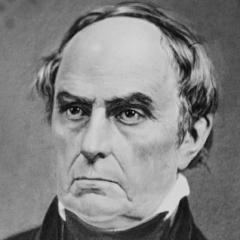
Daniel Webster

Daniel Webster Quotes

Former United States Senator

Filter quotes by topic

Famous Daniel Webster Quotes

“The inherent right in the people to reform their government, I do not deny; and they have another right, and that is to resist unconstitutional laws without overturning the government.”

“Nothing is more deceptive or more dangerous than the pretence of a desire to simplify government. The simplest governments are despotisms; the next simplest, limited monarchies; but all republics, all governments of law, must impose numerous limitations and qualifications of authority, and give many positive and many qualified rights.”

“In the nature of things, those who have no property and see their neighbors possess much more than they think them to need, cannot be favorable to laws made for the protection of property. When this class becomes numerous, it becomes clamorous. It looks on property as its prey and plunder, and is naturally ready, at times, for violence and revolution.”

“We are bound to maintain public liberty, and, by the example of our own systems, to convince the world that order and law, religion and morality, the rights of conscience, the rights of persons, and the rights of property, may all be preserved and secured, in the most perfect manner, by a government entirely and purely elective. If we fail in this, our disaster will be significant, and will furnish an argument, stronger than has yet been found, in support of those opinions which maintain that government can rest safely on nothing but power and coercion.”

“Let us hold fast the great truth, that communities are responsible, as well as individuals; that no government is respectable which is not just. Without unspotted purity of public faith, without sacred public principle, fidelity, and honor, no machinery of laws, can give dignity to political society.”

“It would seem, then, to be the part of political wisdom to found government on property; and to establish such distribution of property, by the laws which regulate its transmission and alienation, as to interest the great majority of society in the protection of the government.”

“The freest government, if it could exist, would not be long acceptable, if the tendency of the laws were to create a rapid accumulation of property in a few hands, and to render the great mass of the population dependent and penniless.”