Quotessence
Home / Authors / Dejan Stojanovic
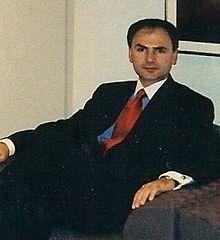
Dejan Stojanovic

Dejan Stojanovic Quotes

Poet

Filter quotes by topic

Famous Dejan Stojanovic Quotes

“From the standard view of the main religions, God created the Universe. Based on this standard, the Universe is material, but the Creator is immaterial. On the other hand, we can imagine that the Universe has always existed, and if that were the case, there was no creator to create it; “it simply is” (Bertrand Russell). We certainly know that the Universe, regardless of whether it was created by God or not (always existing without a cause), is evolving. The Universe is not static. The Universe is the source, the cause, and an inexhaustible reservoir of energy, possibilities, and life. Although it sounds paradoxical, the Universe is “physical” and non-physical. As such, it contains metaphysics in its very Being. The physical feature of the Universe is only an expression of its metaphysical, "ethereal," nonphysical nature (the Kantian being-in-itself); physics is its appearance, and metaphysics is its essence. (The appearance is in motion, yet the essence is static. Motion [in the classical “physical” sense] is possible in the world of physics and impossible in metaphysics [immaterial world].) Based on our perceptions and beliefs, the starting point cannot change the nature of the Universe. Created or uncreated, the Universe is. The Universe would never be different, regardless of our point of view; only our ideas about the Universe may change. The more important question is whether our concept of the Universe would be different if we changed our starting position. Could the Universe potentially be different depending on these two starting points? Either way, if God created it or it always existed in one form or another, the Universe may show and possess the same qualities, in which case this dichotomy would not be substantially important, except formally. The third idea could imply God in the Universe (not in the strict sense of Spinoza's pantheism) and the Universe in God. What does this mean? It means that the Universe is, in either case, a manifestation of something that has always existed. If something never existed, it would not be able to come into Being. Absolute nothingness cannot give birth to anything, either God or the Universe. If this were the case, then Nothingness would be the first cause. If God is the first cause and source of everything, then based on this logic, God would be nothing because God came from nothing. On the other hand, if the Universe came from nothing, the Universe would be nothing. Only nothing can come from nothing. Nothing is incapable of creating or making anything. Therefore, the question of who created God or who created the Universe is, at best, counterproductive and sterile. From this hypothetical point of view, it would not matter if God created the Universe. If God or the Universe always existed in some way or another, the critical question would be whether there is any difference between God, understood in this way, and the Universe. For if God always existed, what would make it so distinctly and inherently different from the Universe? Or if the Universe always existed, what would make it inherently different from God?”

“Everything singular can be conceived and, sooner or later, comprehended by thought. Everything that is not true has the potential to be disclosed as such—not accurate. However, in its totality, the final, absolute truth is beyond reach—it is hiding and shifting. Still, as perfection, the Absolute cannot be untrue because, in that case, it would not be perfection. Therefore, it must be perfect and true at the same time. It is possible to conceive the Absolute as the truth. In this sense, it is possible to conceive that Nothing is the truth.”

“Just of itself—nothing is nothing, but just of itself, something, even the biggest something or God, is nothing too. Nothing is uncreated and doesn’t need a creator. However, the world would not be possible without this uncreated Nothing, regardless of God’s “omnipotence.” Since God cannot create nothingness, its omnipotence is contingent upon nothingness. If omnipotence is contingent upon anything, it is not absolute omnipotence, even if this anything is nothing.”

“The comment about the South of South Pole is a logical fallacy because it presupposes nothing existed before the Big Bang. The Entity before the Big Bang is not comparable to what is south of the South Pole. The idea that we do not understand that there is something "North, South, East, and West" of the Big Bang does not mean that these "North, South, East, and West" do not exist in a way incomprehensible to our limited cognitive powers, senses, and based on limited scientific discoveries. That which lies beyond time and space and is the source of everything we see cannot be referenced only by the too-simplistic and sometimes semi-humorous means. Our language and words or terms describing the sides of the “physical world” are limited if we want to apply them to the metaphysical, immaterial realm beyond space and time. In no way does this kind of reasoning or “arguments” prove that the Universal Source of Everything does not exist. I have chosen to call this Source of Everything, known and unknown, the Universal Mind. In our sense of the word, there is no space before the Big Bang, and there are no sides of any kind, not to mention sides of the World. South of the South Pole is just Nothingness from a physical point of view. There are no sides of the world in the primordial Nothingness or the Absolute Vacuum. At the same time, this Nothingness “hides” immaterial Being, the Universal Source of everything.”

“There is a universal reservoir, the source of all knowledge, which is the same for the arts and sciences as for philosophy and religion. In a way, science is an art. In some ways, religion is philosophy because philosophy and religion often deal with the same questions—with the first and the final causes, among others. Religious people a priori “bet” on God, whereas philosophers may bet on God or not. The difference in approach toward God between religion and philosophy is that religion imposes and prescribes God, and philosophy offers the freedom of thought and choice. Religious prescriptions of God are not proof of faith or God’s existence, but rather the opposite—they prove that philosophy is more “religious” than religion because it doesn’t steal God from people but offers freedom.”

“Canonization, limitation, and reduction of God to a “few” sentences are inconceivable attempts to kill and expel God from people under the excuse that God is doing that. There is no weakness in science and language as instruments. There is no excuse. There is only human power and weakness. Understanding depends on the balance between human strengths and weaknesses.”

“The world was ready for greater discoveries two thousand years ago. (Heron of Alexandria is an excellent example of an inventor who invented the first steam engine, aeolipile.) There was a basis for it. Only the language to translate abstract ideas and symbols into the language of science was missing. The only obstacle to a human being is a human being himself. The only limitation comes from the inability to dream and pierce into the essence that permeates all that exists in the universe. There is the same law for a galaxy, for a man, and for an ant. Basic principles are the same everywhere; they never change and exist as long as the universe exists.”

“Nothing in the world can be absolute except the Absolute itself. Everything else is contained and exists in relations. Relations can exist only through the division of the Absolute or God. Since no part is absolute, then no part can completely understand (including the human mind) or comprehend the whole of the Absolute. Understanding the “final” laws leads toward the end. If humans understood and empowered themselves with the knowledge of these laws, they would cease to be humans and become what they sought to find or understand. In that way, humans become either God or nothing. The ultimate beauty is the evolution of the world. Evolution in the animal world (individual species) can be horizontal without major changes. Still, in the development of humans, it can be pretty vertical (thanks to awareness and brain power). Regardless of the vertical evolution of humans as biological beings, this is still only evolution, and evolution is only possible if something new is acquired, for the lack of final knowledge, about the final causes and the ultimate essence of being.”

“That which we never question is the concept itself. But what is a concept? Is it necessary to put the idea of a concept itself, or the law, under the magnifying glass to better understand it because a concept is only a word or term it expresses? Even the concept itself, as an idea or term, can be a matter of discussion or scientific, philosophical, artistic, or religious discourse. Consequently, we may discover that something that slowed down the development of ideas and their formulations or understanding of laws is the impossibility of breaking up with concepts or paradigms that became a priori truths.”

“God is a concept more than anything else. The idea of God or about God, as it functions in religions, doesn’t deal with reality but with presuppositions based on revelations. Revelation, in itself, is arbitrary and can result from hallucination, among other things, which does not exclude the possibility that even hallucination may lead to some ways of truth.”

“From the point of established religions, God is conceptually the source of the world, something that creates the world but stays beyond the world as something absolute that influences the world. Not only is God understood in this way, but it is also appropriated in the main monotheistic religions. Therefore, from the standpoint of official religions, it is much more important to claim God understood in this manner and establish the right to God than the God itself (accurate idea and concept of God). That is how this strange ownership functions and obtains “legitimacy.”

“Divine Hiddenness Argument against God’s Existence Divine Hiddenness does not necessarily mean that the Ultimate Being hides; it instead means that our human powers are limited. The natural laws were secret (and still are) to the people before they learned to decipher them slowly. We may say that Newton's laws deciphered and formulated were hidden up to that point not because they were hiding per se but because our abilities were not on par with the laws of physics, which we have thought were “hidden.” It is a poor argument to use hiddenness as a legitimate argument against God or against anything else, of which, at some point, we do not have a proper or complete understanding. Hiddenness by itself is not proof that God does not exist. By using that logic, we may say that mosquitos are not aware of the existence of human beings. The argument that they are very “aware,” in some sense while sucking the blood of humans would not be sufficient because they are not aware of who and what human beings are. Certainly, microorganisms, without any desire to compare human beings with microorganisms, are not aware of the existence of human beings. What if animals used an argument, if they could, that there is no evidence that there are many galaxies in the Universe, or if any other animal could have used that argument? Would that be proof that other galaxies do not exist? On what basis are we sure that we possess the ability to experience God directly if it existed (although the world is one of the faces of God)? I am not trying to compare human beings to other animals or diminish human abilities. Still, I would like to emphasize that, regardless of how advanced we are, we may still be as distant from God, or more, as some animals are from us. To rely only on evidence is to limit the science, not to be scientific. What is scientific in limiting science to the frame that fits our capacity for understanding, learning, and comprehension instead of fitting the frame of reality and the truth? To be precise, we would need to redefine or make the idea of God more precise. Maybe God is not what we think it is. What if the World itself is God? What if the World, regardless of its beginning and end, is still a consequence of an eternal Being without a beginning and end? What if the world and matter as we know it are only the modes of the Universal Eternal Being from which everything originates and to which everything returns? Matter is not what we think it is. God is not what religious books say. Nobody has the right to God, a title to God. No prophet can tell other people that he (or she) speaks the word of God. Humans do the things done in the name of God in their name, not the name of God. Their hiding behind God is a form of manipulation, demagogy, and control of others.”

“The lack of understanding and some consensus about the question of God shows the fanaticism of both religious people and atheists who have become atheists more because of hate toward religion than because of “hatred” toward God. Therefore, they cannot understand the difference between God and religion. Curt Gödel (1906—1978) noted, '[I am] against religions but not against religion.' Without intermediaries and 'holy books,' real religion is the desire to reconnect (religio) to the Ultimate Source.”

“Maybe Democritus did not understand that matter, as a convention or the world of atoms that makes the whole Universe, including our brain, which “rules” the senses and cognition, is the same convention. However, an atom is a convention. The World is a Convention of the Absolute. The conventions must be relative; only the Absolute is unconventional, but only by and through conventions are the world and life possible.”

“Absolute is infinitesimal, almost nonexistent “materially.” It is smaller than any conceivable shape or object, smaller than a quark, not even the size of the Planck length. In its volume, every divided world and Everything inhabited by emptiness is “bigger” than the Absolute. But only this nothing, emptiness, makes the life of the Absolute possible. If the One is undivided, it is without motion; the power becomes a weakness because it is without an exit.”

“In diluted reality, the whole world is the same; the micro-dimension is the same everywhere; the macro dimension is the illusion of the senses and eyes. Macro-shapes exist, but only as of the sum, not as inherently different. The basis of every star and every galaxy is the same—antimatter or dark matter and dark energy hide similar or opposite laws in themselves. However, although they are similar or opposite to the visible ones, they are based on the same laws of the bigger or smaller “particles,” shapes, and masses. The same principles are everywhere, from the visible to the invisible world or in the world incomprehensible or beyond the cognitive ability of humans.”

“The idea of the Absolute implies perfection. Absolute is impossible if it is not perfect. Nevertheless, is it possible to conceive anything perfect? Everything that exists has shortcomings. Even if we imagine something as perfect, it cannot be absolute perfection. It does not capture the whole and can only exist in relation to other phenomena. The world is exposed to change at any moment and does not function as an absolute perfection but as a flaw, evolution, and development.”

“We have to ensure we understand what existence is and what an I is in the context of an accepted consensus about these terms and definitions. Our reasoning and arguments may be correct if we know more deeply what existence or an I is. The most important thing is to go beyond words or literal expressions to catch the real intentions of philosophers and thinkers rather than to catch potential linguistic errors. We may temporarily win arguments and make personal gains if we only pursue linguistic errors. Still, we would produce confusion and lead the sincere search for scientific or philosophical discoveries astray.”

“We may ask the question: What is reality? What is the real or objective reality? Finally, we may be surprised by the ultimate answer of reality: that the thing or reality is the illusion itself because the Ultimate Source, the Ultimate Reality, at its supreme point, is equal to Nothingness. That would mean that the Ultimate Reality is Nothingness. The Ultimate Source is the Ultimate Potential. Whether the actualization of this potential is reality or illusion is irrelevant. What is important is the existence and realization of the potential.”