Filter quotes by topic
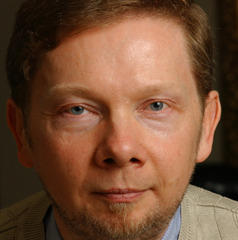
Famous Eckhart Tolle Quotes
Source: A New Earth (Oprah #61): Awakening to Your Life's Purpose
Source: Oneness With All Life: Inspirational Selections from A New Earth
Source: A New Earth (Oprah #61): Awakening to Your Life's Purpose
Source: Practicing the Power of Now: Essential Teachings, Meditations, and Exercises from the Power of Now
Source: The Power of Now: A Guide to Spiritual Enlightenment
“When you accept everything for what it is without labels you are outside of your ego.”
Source: The Power of Now: A Guide to Spiritual Enlightenment
Source: A New Earth (Oprah #61): Awakening to Your Life's Purpose
Source: A New Earth (Oprah #61): Awakening to Your Life's Purpose
“The ego says, I shouldn't have to suffer, and that thought makes you suffer so much more.”
Source: A New Earth (Oprah #61): Awakening to Your Life's Purpose
Source: A New Earth (Oprah #61): Awakening to Your Life's Purpose
Source: A New Earth (Oprah #61): Awakening to Your Life's Purpose
Source: Stillness Speaks
“The ego doesn't know that the source of all energy is within you, so it seeks it outside.”
Source: A New Earth (Oprah #61): Awakening to Your Life's Purpose
Source: The Power of Now: A Guide to Spiritual Enlightenment
Source: A New Earth (Oprah #61): Awakening to Your Life's Purpose
Source: A New Earth (Oprah #61): Awakening to Your Life's Purpose
“Suffering has a noble purpose: the evolution of consciousness and the burning up of the ego.”
Source: A New Earth (Oprah #61): Awakening to Your Life's Purpose
Source: A New Earth (Oprah #61): Awakening to Your Life's Purpose
“To the ego, the present moment hardly exists. Only past and future are considered important.”
Source: The Power of Now: A Guide to Spiritual Enlightenment
Source: A New Earth (Oprah #61): Awakening to Your Life's Purpose
Source: A New Earth (Oprah #61): Awakening to Your Life's Purpose
Source: A New Earth (Oprah #61): Awakening to Your Life's Purpose
Source: The Power of Now: A Guide to Spiritual Enlightenment
Source: A New Earth (Oprah #61): Awakening to Your Life's Purpose
Source: The Power of Now: A Guide to Spiritual Enlightenment
“Whatever the ego seeks and gets attached to are substitutes for the Being that it cannot feel.”
Source: A New Earth (Oprah #61): Awakening to Your Life's Purpose
Source: A New Earth (Oprah #61): Awakening to Your Life's Purpose
Source: A New Earth (Oprah #61): Awakening to Your Life's Purpose
Source: A New Earth (Oprah #61): Awakening to Your Life's Purpose
“Awareness and ego cannot coexist.”
Source: A New Earth (Oprah #61): Awakening to Your Life's Purpose
“Complaining is one of the ego's favorite strategies for strengthening itself.”
Source: A New Earth (Oprah #61): Awakening to Your Life's Purpose
Source: Stillness Speaks
“There is nothing that strengthens the ego more than being right !”