Quotessence
Home / Authors / Edwidge Danticat Books
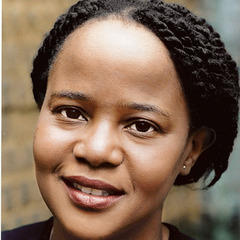
Edwidge Danticat

Edwidge Danticat Books

Author

Krik? Krak!

A source page for quotes linked to Edwidge Danticat.
0 quotes

The Dew Breaker

A source page for quotes linked to Edwidge Danticat.

0 quotes

Related Quotes

“Those who die young, they are cheated,” she said. “Not cheated out of life, because life is a penance, but the young, they’re cheated because they don’t know it’s coming. They don’t have time to move closer, to return home. When you know you’re going to die, you try to be near the bones of your own people. You don’t even think you have bones when you’re young, even when you break them, you don’t believe you have them. But when you’re old, they start reminding you they’re there. They start turning to dust on you, even as you’re walking here and there, going from place to place. And this is when you crave to be near the bones of your own people. My children never felt this. They had to look death in the face, even before they knew what it was. Just like you did, no?”

“Like perhaps most people whose loved ones have died, I wish that I had some guarantees about the afterlife. I wish I were absolutely certain that my father and uncle are now together in some tranquil and restful place, sharing endless walks and talks beyond what their too-few and too-short visits allowed. I wish I knew that they were offering enough comfort to one another to allow them both not to remember their distressing, even excruciating, last hours and days. I wish I could fully make sense of the fact that they’re now sharing a gravesite and a tombstone in Queens, New York,after living apart for more than thirty years.In any case, every now and then I try to imagine them on a walk through the mountains of Beauséjour. It’s dawn, a dazzling morning over the green hills. The sun is slowly rising, burning through the fog. They’re peacefully making their way down the zigzag trail that joins the villages to the rest of the world below. And in my imagining, whenever they lose track of one another, one or the other calls out in a voice that echoes throughout the hills, “Kote w ye frè m?” Brother, where are you? And the other one quickly answers, “Mwen la. Right here, brother. I’mright here.”

“Looking into my daughter’s eyes, I thought of my mother, who had faced these first hours alone after I was born. She had been made no promises, been offered no guarantees that either she or I would even live past that night. If something had been ruptured inside of her, no one would have noticed. If something had been broken inside of newborn me, perhaps no one but my mother would have cared. My daughter’s quiet yet well-monitored first night was perhaps the one my mother had dreamed for me, for herself, a dream of kind words, kisses, flowers.”

“I realized that afternoon that for nearly a year, while my mother, brothers and I had constantly carried food up to my father, we had rarely eaten with him. Somehow it hadn’t occurred to me that he missed sharing a table or aplate, passing a spice or a spoon. But he did. Just as he missed seeing certain faces and places and hearing certain voices that neither his friends nor family nor the television could successfully transport to his room”

“We are not meant to be in this country. We did not want to come. We were forced to flee or die. Americans perceive desperate brown masses swarming at their golden shores, wildly inventing claims of persecution for the opportunity to flourish in this prosperous land. The view from beneath the bridge is somewhat different: reluctant refugees with an aching love of their forsaken homeland, of a homeland that has forsaken them, refugees who desire nothing more than to be home again.”

“I sometimes feel as though we are all daughters of the same mythical mother. Some of us are super direct, funny. Others are pensive, inquisitive, maudlin, bitter, sarcastic, or a combination of all those things. Yet we have all been orphaned, except by our words, which we eventually turn to in order to make sense of the impossible, the unknowable.”

“That experience of touching down in a totally foreign place is like having a blank canvas: You begin with nothing, but stroke by stroke you build a life. This process requires everything great art requires-risk-tasking, hope, a great deal of imagination, all the qualities that are the building blocks of art. You must be able to dream something nearly impossible and toil to bring it into existence.”

“One of the things that sparked my interest in this is the case of Emmanuel Constant, who started a militia called FRAPH that was backed by the CIA. FRAPH killed thousands of Haitians in the early 1990s. Now while Constant is living comfortably in Queens, other Haitians are being deported. I wanted to see how those who have been bruised by people like that deal with coming face to face with their torturers.”

“We still have our people working in the cane fields in the Dominican Republic. People are still repatriated all the time from the Dominican Republic to Haiti. Some tell of being taken off buses because they looked Haitian, and their families have been in the Dominican Republic for generations. Haitian children born in the Dominican Republic still can't go to school and are forced to work in the sugarcane fields.”