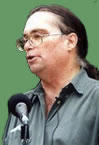
“When the atheist is told that God is unknowable, he may interpret this claim in one of two ways. He may suppose, first, that the theist has acquired knowledge of a being that, by his own admission, cannot possibly be known; or, second, he may assume that the theist simply does not know what he is talking about.” KnowsWayFirstsMayDoeTwoTalkingKnownAtheismClaimsAssumingAtheistPositive AtheismTwo WaysAdmissionTheist Book:Why Atheism? Source: Why Atheism?
“A willingness to engage in the give and take of argument displays a commitment to cognitive egalitarianism - the proposition that all people should be treated as intellectual equals, and that no individual can legitimately claim a privileged immunity from the burden of proof.” PeopleGivingShouldIndividualAtheismIntellectualCommitmentArgumentClaimsBurdenPositive AtheismProofTreatedWillingnessDisplayPrivilegedPropositionsCognitiveImmunityGive And TakeEgalitarianismBurden Of Proof Book:Why Atheism? Source: Why Atheism?
“The significant contribution of empiricism was not the eradication of certainty, but the eradication of infallibility as a criterion of certainty. And this shift from infallibilism to fallibilism has profound consequences not only for toleration, but also for the subordination of faith to reason and theology to philosophy.” ReasonPhilosophyAtheismConsequenceProfoundPositive AtheismSignificantTheologyCertaintyContributionCriteriaTolerationEmpiricismSubordinationInfallibility Book:Why Atheism? Source: Why Atheism?
“The leap of faith is a strategic impasse that confronts every Christian in search of converts; and, as he sees the matter, there is no wrong way to become a Christian. It is the end that is importnat, not the means; it does not matter why you believe, so long as you believe. For the philosopher, in contrast, the paramount issue is the justification of belief, not the fact of belief itself.” WayBelieveMeanLongDoeEndsMatterFactsChristianBeliefIssuesAtheismPhilosopherPositive AtheismLeapContrastJustificationStrategicWrong WayParamountLeap Of FaithImpasse Author:George H. Smith
“As for Christianity's alleged concern with truth, Christian faith is to free inquiry what the Mafia is to free enterprise. Christianity may be represented as a competitor in the realm of ideas to be considered on the basis of its merits, but this is mere disguise. Like the Mafia, if Christianity fails to defeat its competition by legitimate means (which is a forgone conclusion), it resorts to strong-arm tactics. Have faith or be damned - this biblical doctrine alone is enough to exclude Christianity from the domain of reason.” IfsMayMeanIdeasReasonEnoughChristianStrongChristianityFailingAtheismArmsConcernBasesCompetitionMereDefeatPositive AtheismDoctrineConclusionMeritRealmsEnterpriseHave FaithBiblicalDisguiseInquiryCompetitorsDomainTacticsResortsMafiaChristian FaithFree EnterpriseStrong Arms Book:Atheism: The Case Against God Source: Atheism: The Case Against God
“Through inculcating the notion that sacrifice is a virtue, Christianity has succeeded in convincing many people that misery incurred through sacrifice is a mark of virtue. Pain becomes the inignia of morality - and conversely, pleasure becomes the insignia of immorality. Christianity, therefore, does not say, "Go forth and be miserable." Rather, it says, "Go forth and practice the virtue of self-sacrifice." In practical terms, these commands are identical.” PeopleDoeSelfPainTermPleasureChristianityPracticeVirtueSacrificeAtheismMoralityMarkMiseryNotionPositive AtheismPracticalsCommandMiserableConvincingIdenticalSelf SacrificeImmorality Author:George H. Smith
“The argument from design is ultimately an appeal to miraculous causes, i.e., causes that do not, and cannot, occur in the natural course of events. This is why an explanation via design is not a legitimate alternative to scientific and other naturalistic modes of explanation. To refer to a miraculous cause is to refer to something that is inherently unknowable, and this sanctuary of ignorance explains nothing at all. However much it may soothe the imagination of the ignorant, it does nothing to satisfy the understanding of a rational person.” MayPersonsDoeCoursesCausesUnderstandingImaginationNaturalAtheismEventsDesignIgnoranceArgumentPositive AtheismIgnorantRationalAlternativesAppealsExplanationMiraculousSanctuary Book:Why Atheism? Source: Why Atheism?
“It is my firm conviction that man has nothing to gain, emotionally or otherwise, by adhering to a falsehood, regardless of how comfortable or sacred that falsehood may appear.” MenMayAtheismComfortableGainsSacredConvictionPositive AtheismFirmFalsehood Book:Atheism: The Case Against God Source: Atheism: The Case Against God