Quotessence
Home / Authors / George Henry Lewes
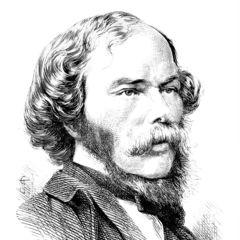
George Henry Lewes

George Henry Lewes Quotes

Philosopher

Filter quotes by topic

Famous George Henry Lewes Quotes

“If the members of a class do not understand -- if those directly addressed fail to listen, or listening, fail to recognize a power in the voice -- surely the fault lies with the speaker, who, having attempted to secure their attention and enlighten their understandings, has failed in the attempt.”

“If I advance new views in Philosophy or Theology, I cannot expect to have many adherents among minds altogether unprepared for such views; yet it is certain that even those who most fiercely oppose me will recognize the power of my voice if it is not a mere echo; and the very novelty will challenge attention, and at last gain adherents if my views have any real insight.”

“The moral nature of man is more sacred in my eyes than his intellectual nature. I know they cannot be divorced - that without intelligence we should be brutes - but it is the tendency of our gaping, wondering dispositions to give pre-eminence to those faculties which most astonish us. Strength of character seldom, if ever, astonishes; goodness, lovingness, and quiet self-sacrifice, are worth all the talents in the world.”

“I have always considered The Merry Wives one of the worst plays, if not altogether the worst, that Shakespeare has left us. The wit for the most part is dreary or foolish; the tone is coarse and farcical; and the characters want the fine distinctive touches he so well knew how to give. If some luckless wight had written such a comedy in our time, I should like to see what the critics would say to it?”

“Roger_Bacon" title="Roger Bacon">Roger Bacon expressed a feeling which afterwards moved many minds, when he said that if he had the power he would burn all the works of the Stagirite, since the study of them was not simply loss of time, but multiplication of ignorance. Yet in spite of this outbreak every page is studded with citations from Aristotle, of whom he everywhere speaks in the highest admiration.”

“Science as we now understand the word is of later birth. If its germinal origin may be traced to the early period when Observation, Induction, and Deduction were first employed, its birth must be referred to that comparatively recent period when the mind, rejecting the primitive tendency to seek in supernatural agencies for an explanation of all external phenomena, endeavoured, by a systematic investigation of the phenomena themselves to discover their invariable order and connection.”