Quotessence
Home / Authors / George Henry Lewes Books
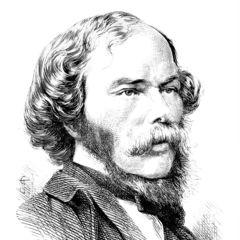
George Henry Lewes

George Henry Lewes Books

Philosopher

Dramatic Essays

A source page for quotes linked to George Henry Lewes.
0 quotes

Ranthorpe ...

A source page for quotes linked to George Henry Lewes.

0 quotes

Related Quotes

“The selective instinct of the artist tells him when his language should be homely, and when it should be more elevated; and it is precisely in the imperceptible blending of the plain with the ornate that a great writer is distinguished. He uses the simplest phrases without triviality, and the grandest without a suggestion of grandiloquence.”

“Literature is at once the cause and the effect of social progress. It deepens our natural sensibilities, and strengthens by exercise our intellectual capacities. It stores up the accumulated experience of the race, connecting Past and Present into a conscious unity; and with this store it feeds successive generations, to be fed in turn by them.”

“To love is for the Soul to choose a companion, and travel with it along the perilous defiles and winding ways of life; mutually sustaining, when it is rugged with obstructions, and mutually rejoicing, when rich broad plains and sunny slopes make journeying delight.”

“If the members of a class do not understand -- if those directly addressed fail to listen, or listening, fail to recognize a power in the voice -- surely the fault lies with the speaker, who, having attempted to secure their attention and enlighten their understandings, has failed in the attempt.”

“Our native susceptibilities and acquired tastes determine which of the many qualities in an object shall most impress us, and be most clearly recalled. One man remembers the combustible properties of a substance, which to another is memorable for its polarising property; to one man a stream is so much water-power, to another a rendezvous for lovers.”

“If I advance new views in Philosophy or Theology, I cannot expect to have many adherents among minds altogether unprepared for such views; yet it is certain that even those who most fiercely oppose me will recognize the power of my voice if it is not a mere echo; and the very novelty will challenge attention, and at last gain adherents if my views have any real insight.”

“The moral nature of man is more sacred in my eyes than his intellectual nature. I know they cannot be divorced - that without intelligence we should be brutes - but it is the tendency of our gaping, wondering dispositions to give pre-eminence to those faculties which most astonish us. Strength of character seldom, if ever, astonishes; goodness, lovingness, and quiet self-sacrifice, are worth all the talents in the world.”

“I have always considered The Merry Wives one of the worst plays, if not altogether the worst, that Shakespeare has left us. The wit for the most part is dreary or foolish; the tone is coarse and farcical; and the characters want the fine distinctive touches he so well knew how to give. If some luckless wight had written such a comedy in our time, I should like to see what the critics would say to it?”

“In urging all writers to be steadfast in reliance on the ultimate victory of excellence, we should no less strenuously urge upon them to beware of the intemperate arrogance which attributes failure to a degraded condition of the public mind. The instinct which leads the world to worship success is not dangerous. The book which succeeds accomplishes its aim. The book which fails may have many excellencies, but they must have been misdirected.”

“Whatever lies beyond the limits of experience, and claims another origin than that of induction and deduction from established data, is illegitimate.”

“"There is one basis of science," says Descartes, "one test and rule of truth, namely, that whatever is clearly and distinctly conceived is true." A profound psychological mistake. It is true only of formal logic, wherein the mind never quits the sphere of its first assumptions to pass out into the sphere of real existences; no sooner does the mind pass from the internal order to the external order, than the necessity of verifying the strict correspondence between the two becomes absolute. The Ideal Test must be supplemented by the Real Test, to suit the new conditions of the problem.”

“Roger_Bacon" title="Roger Bacon">Roger Bacon expressed a feeling which afterwards moved many minds, when he said that if he had the power he would burn all the works of the Stagirite, since the study of them was not simply loss of time, but multiplication of ignorance. Yet in spite of this outbreak every page is studded with citations from Aristotle, of whom he everywhere speaks in the highest admiration.”

“Roger Bacon, a disciple of the Arabs, also insisted on the primary necessity of Mathematics, without which no other science can be known; yet by Mathematics it is clear that he meant something very different from what we mean, including under that head even dancing, singing, gesticulation, and performance on musical instruments.”

“Science as we now understand the word is of later birth. If its germinal origin may be traced to the early period when Observation, Induction, and Deduction were first employed, its birth must be referred to that comparatively recent period when the mind, rejecting the primitive tendency to seek in supernatural agencies for an explanation of all external phenomena, endeavoured, by a systematic investigation of the phenomena themselves to discover their invariable order and connection.”

“The separation of Science from Knowledge was effected step by step as the Subjective Method was replaced by the Objective Method: i.e., when in each inquiry the phenomena of external nature ceased to be interpreted on premisses suggested by the analogies of human nature.”

“He who is ignorant of Motion, says Aristotle , is necessarily ignorant of all natural things. ...Not only was he entirely in the dark respecting the Laws, he was completely wrong in his conception of the nature of Motion. ...He thought that every body in motion naturally tends to rest.”

“The spontaneous tendency to invoke a Final Cause in explanation of every difficulty is characteristic of metaphysical philosophy. It arises from a general tendency towards the impersonation of abstractions which is visible throughout History.”

“To his [ Plato's ] great disappointment, he found Anaxagoras adducing simple physical reasons, instead of the teleological reasons, which he had expected. Such a teacher could no longer allure him.”

“Most expositions of Aristotle's doctrines, when they have not been dictated by a spirit of virulent detraction, or unsympathetic indifference, have carefully suppressed all, or nearly all, the absurdities, and only retained what seemed plausible and consistent. But in this procedure their historical significance disappears.”

“It is not true that a man can believe or disbelieve what he will. But it is certain that an active desire to find any proposition true will unconsciously tend to that result by dismissing importunate suggestions which run counter to the belief, and welcoming those which favor it. The psychological law, that we only see what interests us, and only assimilate what is adapted to our condition, causes the mind to select its evidence.”

“Not only the individual experience slowly acquired, but the accumulated experience of the race, organized in language, condensed in instruments and axioms, and in what may be called the inherited intuitions--these form the multiple unity which is expressed in the abstract term "experience.”