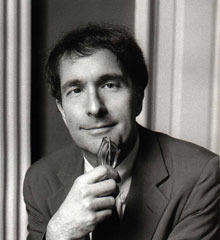
“I believe that the brain has evolved over millions of years to be responsive to different kinds of content in the world. Language content, musical content, spatial content, numerical content, etc.” WorldYearsBelieveKindDifferentLanguageI BelieveBrainMillionsMusicalEtcDifferent KindsSpatialMultiple Intelligences Author:Howard Gardner
“Anything that is worth teaching can be presented in many different ways. These multiple ways can make use of our multiple intelligences.” WayDifferentUseTeachingDifferent WaysMultipleMultiple Intelligences Author:Howard Gardner
“Emile Zola was a poor student at his school at Aix. We are all so different largely because we all have different combinations of intelligences. If we recognize this, I think we will have at least a better chance of dealing appropriately with many problems that we face in the world.” IfsThinkingWorldDifferentProblemSchoolFacesChancePoorStudentsCombinationZola Author:Howard Gardner
“When speaking to parents, I encourage them to take their child(ren) to a children's museum and watch carefully what the child does, how she/she does it, what he/she returns to, where there is definite growth. Teachers could do the same or could set up 'play areas' which provide 'nutrition' for different intelligences... and watch carefully what happens and what does not happen with each child.” ChildrenDoeDifferentPlayHappensParentGrowthWatchesTeacherReturnAreasMuseumsNutritionDefinite Author:Howard Gardner
“When a child is thriving, there is no reason to spend time assessing intelligences. But when a child is NOT thriving - in school or at home - that is the time to apply the lens of multiple intelligences and see whether one can find ways to help the child thrive in different environments.” WayChildrenDifferentReasonHelpingHomeSchoolEnvironmentThriveNo ReasonMultipleEnd TimesLensesSpend TimeAssessingDifferent EnvironmentsMultiple Intelligences Author:Howard Gardner
“Don't assume that the way that one searches and researches is the same from one era to another - it isn't. In the 19th century, most research was done by amateurs: either individuals who were rich or individuals who had a day job. In the 20th century, most researchers worked at universities or think tanks and received money from the government or from foundations to pursue their work. In our time, the sources of support and the locations for research may be quite different.” ThinkingWayMayDifferentDoneGovernmentJobsIndividualSupportRichCenturySourceResearchFoundationAssumingUniversityPursueErasOur TimeLocation20th CenturyTanks19th CenturyResearchersDay Jobs Author:Howard Gardner
“Distinguish between the work and the job title. When I was leaving school in the early 1970s, many people wanted to be journalists, carrying out investigative reporting for print newspapers. Print newspapers may not exist in twenty years. But good thinking and good writing about issues that need to be reported and investigated will always be needed; but where this happens, what it is called, and who pays for it may be quite different than could have been envisioned by the great journalists of the past.” PeopleThinkingNeedsWritingYearsMayHas BeensDifferentHappensWantedSchoolJobsPastPayIssuesNeededTwentiesLeavingNewspapersJournalistTitlesPrintCould Have BeenGood WritingGood ThinkingJob TitlesLeaving School Author:Howard Gardner
“The wonderful thing about the theater is that it can emphasize BOTH our diversity AND our common humanity. In many ways, the world of Shakespeare (or Aeschylus or Racine) is totally different from our world; and yet any human being can look through the differences in dress and mores and discover our common problems, passions, and potentials.” WorldWayHumansLooksDifferentProblemHumanityPassionDifferencesHuman BeingsCommonWonderfulDiversityTheaterDressesOur WorldWonderful ThingsCommon Humanity Author:Howard Gardner
“We've got to do fewer things in school. The greatest enemy of understanding is coverage... You've got to take enough time to get kids deeply involved in something so they can think about it in lots of different ways and apply it.” ThinkingWayDifferentEnoughKidsSchoolUnderstandingEnemyLearningTeachingInvolvedDifferent WaysFewerEnough TimeCoverage Author:Howard Gardner
“While we may continue to use the words smart and stupid, and while IQ tests may persist for certain purposes, the monopoly of those who believe in a single general intelligence has come to an end. Brain scientists and geneticists are documenting the incredible differentiation of human capacities, computer programmers are creating systems that are intelligent in different ways, and educators are freshly acknowledging that their students have distinctive strengths and weaknesses.” WayBelieveHumansMayDifferentEndsUsePurposeCertainBrainStupidStudentsComputerCreatingSmartWeaknessCapacityTestsScientistIntelligentIncrediblesDifferent WaysPersistMonopolyProgrammersEducatorDistinctiveStrength And WeaknessComputer ProgrammersDifferentiationHuman Capacity Author:Howard Gardner
“But once we realize that people have very different kinds of minds, different kinds of strengths -- some people are good in thinking spatially, some in thinking language, others are very logical, other people need to be hands on and explore actively and try things out -- then education, which treats everybody the same way, is actually the most unfair education.” PeopleThinkingWayNeedsTryingMindKindDifferentHandsLanguageRealizingTreatsLogicalDifferent KindsUnfair Author:Howard Gardner
“We should spend less time ranking children and more time helping them to identify their natural competencies and gifts and cultivate these. There are hundreds and hundreds of ways to succeed and many, many different abilities that will help you get there.” WayShouldChildrenDifferentHelpingNaturalAbilitySucceedMore TimeRankingCompetencies Author:Howard Gardner
“Twenty-five years ago, the notion was you could create a general problem-solver software that could solve problems in many different domains. That just turned out to be totally wrong.” YearsDifferentProblemFiveYears AgoTwentiesNotionSolveFive YearsSoftwareDomainTwenty FiveProblem Solvers Author:Howard Gardner