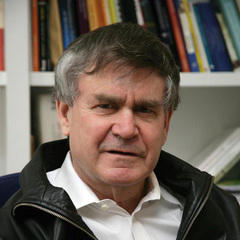
Ian Hacking, born on February 18, 1936, is a renowned philosopher known for his work in the fields of philosophy of science, epistemology, and philosophy of mind. His research delves into the nature of scientific knowledge, the history of scientific revolutions, and the limitations of human cognition.
Related Quotes
Source: Why Does Language Matter to Philosophy?
Source: The Social Construction of What?
Source: The Emergence of Probability: A Philosophical Study of Early Ideas about Probability, Induction and Statistical Inference
“Opinion is the companion of probability within the medieval epistemology.”
Source: The Emergence of Probability: A Philosophical Study of Early Ideas about Probability, Induction and Statistical Inference
Source: The Emergence of Probability: A Philosophical Study of Early Ideas about Probability, Induction and Statistical Inference
Source: The Emergence of Probability: A Philosophical Study of Early Ideas about Probability, Induction and Statistical Inference
Source: The Emergence of Probability: A Philosophical Study of Early Ideas about Probability, Induction and Statistical Inference
Source: The Emergence of Probability: A Philosophical Study of Early Ideas about Probability, Induction and Statistical Inference
“Statistics began as the systematic study of quantitative facts about the state.”
Source: The Emergence of Probability: A Philosophical Study of Early Ideas about Probability, Induction and Statistical Inference
Source: The Emergence of Probability: A Philosophical Study of Early Ideas about Probability, Induction and Statistical Inference
“Probability fractions arise from our knowledge and from our ignorance.”
Source: The Emergence of Probability: A Philosophical Study of Early Ideas about Probability, Induction and Statistical Inference
Source: The Emergence of Probability: A Philosophical Study of Early Ideas about Probability, Induction and Statistical Inference
Source: The Emergence of Probability: A Philosophical Study of Early Ideas about Probability, Induction and Statistical Inference
Source: Representing and Intervening: Introductory Topics in the Philosophy of Natural Science
“Acceptance means commitment, among other things.”
Source: Representing and Intervening: Introductory Topics in the Philosophy of Natural Science
Source: The Taming of Chance
“In each case you settle on an act. Doing nothing at all counts as an act.”
Source: An Introduction to Probability and Inductive Logic Desk Examination Edition
“Plutonium has a quite extraordinary relationship with people. They made it, and it kills them.”
Source: The Social Construction of What?
Source: An Introduction to Probability and Inductive Logic Desk Examination Edition
“The final arbitrator in philosophy is not how we think but what we do.”
Source: Representing and Intervening: Introductory Topics in the Philosophy of Natural Science
Source: Representing and Intervening: Introductory Topics in the Philosophy of Natural Science
“The best reaction to a paradox is to invent a genuinely new and deep idea.”
Source: An Introduction to Probability and Inductive Logic Desk Examination Edition
Source: Representing and Intervening: Introductory Topics in the Philosophy of Natural Science