Quotessence
Home / Authors / Italo Calvino
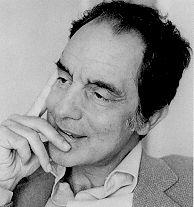
Italo Calvino

Italo Calvino Quotes

Journalist

Filter quotes by topic

Famous Italo Calvino Quotes

“If one wanted to depict the whole thing graphically, every episode, with its climax, would require a three-dimensional, or, rather, no model: every experience is unrepeatable. What makes lovemaking and reading resemble each other most is that within both of them times and spaces open, different from measurable time and space.”

“The inferno of the living is not something that will be; if there is one, it is what is already here, the inferno where we live every day, that we form by being together. There are two ways to escape suffering it. The first is easy for many: accept the inferno and become such a part of it that you can no longer see it. The second is risky and demands constant vigilance and apprehension: seek and learn to recognize who and what, in the midst of inferno, are not inferno, then make them endure, give them space.”

“You are about to begin reading Italo Calvino's new novel, If on a winter's night a traveler. Relax. Concentrate. Dispel every other thought. Let the world around you fade. Best to close the door; the TV is always on in the next room. Tell the others right away, "No, I don't want to watch TV!" Raise your voice -- they won't hear you otherwise -- "I'm reading! I don't want to be disturbed!" Maybe they haven't heard you, with all that racket; speak louder, yell: "I'm beginning to read Italo Calvino's new novel!" Or if you prefer, don't say anything: just hope they'll leave you alone.”

“Your house, being the place in which you read, can tell us the position books occupy in your life, if they are a defense you set up to keep the outside world at a distance, if they area dream into which you sink as if into a drug, or bridges you cast toward the outside, toward the world that interests you so much that you want to multiply and extend its dimensions through books.”

“what he sought was always something lying ahead, and even if it was a matter of the past it was a past that changed gradually as he advanced on his journey, because the traveller's past changes according to the route he has followed: not the immediate past, that is, to which each day that goes by adds a day, but the more remote past. Arriving at each new city, the traveller finds again a past of his that he did not know he had: the foreignness of what you no longer are or no longer possess lies in wait for you in foreign, unpossessed places.”

“The minute you start saying something, 'Ah, how beautiful! We must photograph it!' you are already close to view of the person who thinks that everything that is not photographed is lost, as if it had never existed, and that therefore, in order really to live, you must photograph as much as you can, and to photograph as much as you can you must either live in the most photographable way possible, or else consider photographable every moment of your life. The first course leads to stupidity; the second to madness.”

“Though I leave the house as little as possible, I have the impression that someone is disturbing my papers. More than once I have discovered that some pages were missing from my manuscripts. A few days afterward I would find the pages in their place again. But often I no longer recognize my manuscripts, as if I had forgotten what I had written, or as if overnight I were so changed that no longer recognized myself in the self of yesterday.”