Quotessence
Home / Authors / James F. Cooper
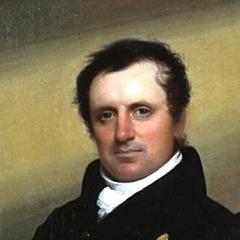
James F. Cooper

James F. Cooper Quotes

Writer

Filter quotes by topic

Famous James F. Cooper Quotes

“One of the most melancholy consequences of this habit of deferring to other nations, and to other systems, is the fact that it causes us to undervalue the high blessings we so peculiarly enjoy; to render us ungrateful towards God, and to make us unjust to our fellow men, by throwing obstacles in their progress towards liberty.”

“Equality, in a social sense, may be divided into that of condition, and that of rights. Equality of condition is incompatible with civilization, and is found only to exist in those communities that are but slightly removed from the savage state. In practice, it can only mean a common misery. Equality of rights is a peculiar feature of democracies. These rights are properly divided into civil and political, though even these definitions are not to be taken as absolute, or as literally exact.”

“How easy it is for generous sentiments, high courtesy, and chivalrous courage to lose their influence beneath the chilling blight of selfishness, and to exhibit to the world a man who was great in all the minor attributes of character, but who was found wanting when it became necessary to prove how much principle is superior to policy.”

“The demagogue is usually sly, a detractor of others, a professor of humility and disinterestedness, a great stickler for equality as respects all above him, a man who acts in corners, and avoids open and manly expositions of his course, calls blackguards gentlemen, and gentlemen folks, appeals to passions and prejudices rather than to reason, and is in all respects, a man of intrigue and deception, of sly cunning and management.”

“The disposition of all power is to abuses, nor does it at all mend the matter that its possessors are a majority. Unrestrained political authority, though it be confided to masses, cannot be trusted without positive limitations, men in bodies being but an aggregation of the passions, weaknesses and interests of men as individuals.”