Quotessence
Home / Authors / Jonathan Safran Foer
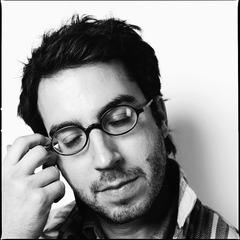
Jonathan Safran Foer

Jonathan Safran Foer Quotes

Writer

Filter quotes by topic

Famous Jonathan Safran Foer Quotes

“Farmers since the beginning of time have been feeding the world very successfully without systematically abusing animals or destroying the environment. But we're breeding food that is less safe for us, it tastes much worse than it ever has in history, and it's wreaking havoc on the environment in a way that it never did in history before. All in the interest of it being cheap.”

“There's nothing good about being certain about things. And I don't think there's any real talent in using language in a manipulative way, with phrases like "tax relief" or "Social Security reform." It's politically clever, but it's also completely disingenuous, and it's not something to aspire to.”

“I love you also means I love you more than anyone loves you, or has loved you, or will love you, and also, I love you in a way that no one loves you, or has loved you, or will love you, and also, I love you in a way that I love no one else, and never have loved anyone else, and never will love anyone else.”

“And the joys I've felt have not always been joyous. I could have lived differently. When I was your age, my grandfather bought me a ruby bracelet. It as too big for me an would slide up and down my arm. It was almost a necklace. He later told me that he had asked the jeweler make that way. Its size was supposed to be a symbol of his love. More rubies, more love. But I could not wear it comfortably. I could not wear it at all. So here is the point of everything I have been trying to say. IF I were to give a bracelet to you, now, I would measure your wrist twice”

“So she had to satisfy herself with the idea of love - loving the loving of things whose existence she didn't care at all about. Love itself became the object of her love. She loved herself in love, she loved loving love, as love loves loving, and was able, in that way, to reconcile herself with a world that fell so short of what she would have hoped for. It was not the world that was the great and saving lie, but her willingness to make it beautiful and fair, to live a once-removed life, in a world once-removed from the one in which everyone else seemed to exist.”

“I feel too much. That's what's going on.' 'Do you think one can feel too much? Or just feel in the wrong ways?' 'My insides don't match up with my outsides.' 'Do anyone's insides and outsides match up?' 'I don't know. I'm only me.' 'Maybe that's what a person's personality is: the difference between the inside and outside.' 'But it's worse for me.' 'I wonder if everyone thinks it's worse for him.' 'Probably. But it really is worse for me.”

“Every widow wakes one morning, perhaps after years of pure and unwavering grieving, to realize she slept a good night's sleep, and will be able to eat breakfast, and doesn't hear her husband's ghost all the time, but only some of the time. Her grief is replaced with a useful sadness. Every parent who loses a child finds a way to laugh again. The timbre begins to fade. The edge dulls. The hurt lessens. Every love is carved from loss. Mine was. Yours is. Your great-great-great-grandchildren's will be. But we learn to live in that love.”

“From the movie "Everything is Illuminated" based on a book by Jonathan Safran Foer: I have reflected many times upon our rigid search. It has shown me that everything is illuminated in the light of the past. It is always along the side of us, on the inside, looking out. Like you say, inside out. Jonathan, in this way, I will always be along the side of your life. And you will always be along the side of mine.”

“We need a better way to talk about eating animals. We need a way that brings meat to the center of public discussion in the same way it is often at the center of our plates. This doesn't require that we pretend we are going to have a collective agreement. However strong our intuitions are about what's right for us personally and even about what's right for others, we all know in advance that our positions will clash with those of our neighbors. What do we do with that most inevitable reality? Drop the conversation, or find a way to reframe it?”

“Just how destructive does a culinary preference have to be before we decide to eat something else? If contributing to the suffering of billions of animals that live miserable lives and (quite often) die in horrific ways isn't motivating, what would be? If being the number one contributor to the most serious threat facing the planet (global warming) isn't enough, what is? And if you are tempted to put off these questions of conscience, to say not now, then when?”

“Can’t you even tell me if I’m on the right track?" Buckminster purred, and Dad shrugged his shoulders again. "But if you don’t tell me anything, how can I ever be right?" He circled something in an article and said, "Another way of looking at it would be, how could you ever be wrong?”

“Cruelty...prefers abstraction. Some have tried to resolved this gap by hunting or butchering an animal themselves, as if those experiences might somehow legitimize the endeavor of eating animals. This is very silly. Murdering someone would surely prove that you are capable of killing, but it woudln't be the most reasonable way to understand why you should or shouldn't do it.”

“Dogs are wonderful, and in many ways unique. But they are remarkably unremarkable in their intellectual and experiential capacities. Pigs are every bit as intelligent and feeling, by any sensible definition of the words. They can't hop into the back of a Volvo, but they can fetch, run and play, be mischievous, and reciprocate affection. So why don't they get to curl up by the fire? Why can't they at least be spared being tossed on the fire?”

“However much we obfuscate or ignore it, we know that the factory farm is inhumane in the deepest sense of the word. And we know that there is something that matters in a deep way about the lives we create for the living beings most within our power. Our response to the factory farm is ultimately a test of how we respond to the powerless, to the most distant, to the voiceless--it is a test of how we act when no one is forcing us to act one way or another.”

“I asked her, "Are you an optimist or a pessimist?" She looked at her watch and said, "I'm optimistic." "Then I have some bad news for you, because humans are going to destroy each others as soon as it becomes easy enough to, which will be very soon." "Why do beautiful songs make you sad?" "Because they aren't true." "Never?" "Nothing is beautiful and true." She smiled, but in a way that wasn't just happy, and said, "You sound just like Dad.”

“There is an overabundance of rational reasons to say no to factory-farmed meat: It is the No. 1 cause of global warming, it systematically forces tens of billions of animals to suffer in ways that would be illegal if they were dogs, it is a decisive factor in the development of swine and avian flus, and so on.”