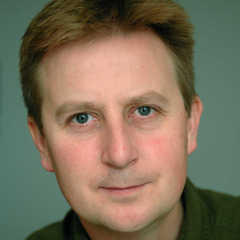
“We do wrong willfully when we fail to think hard about whether what we're doing is right.” ThinkingHardFailing Author:Julian Baggini
“To a certain extent all philosophers have been involved in a systematic questioning that undermines confidence and certainty. Philosophy as a whole unleashed skeptical forces which, outside of the tightly controlled environment of a rigorous philosophical debate, led a lot of people to throw their hands up in despair and think 'what's the point?'. A lot of the public perception of philosophy is that it leaves you with no answers, and more confused than you were at the beginning.” PeopleThinkingPhilosophyEnvironmentDespairPerceptionPhilosophicalPhilosopherDebateCertaintyConfusedQuestioningSkeptical Author:Julian Baggini
“There have been a number of philosophers who have reveled in the dismantling of truth. I think they did so with good ethical motives, and for good philosophical reasons. I can see the sense in what they were talking about; the idea that truth is often claimed by elites in order to further certain agendas. They crowd-out alternative perspectives - particularly those of the powerless. But the undermining of truth contributed - in the weird, indirect way that philosophy contributes to the culture - to a rejection of the idea of truth as having any kind of proper meaning at all.” ThinkingKindReasonPhilosophyCulturePerspectiveTruth IsPhilosophicalPhilosopherMotiveRejectionEthicalPowerlessIndirect Author:Julian Baggini
“I don't think there is ever a direct connection between the philosophical community and the wider populus. I'm very aware of this because I've been working on a book on ideas in global philosophy and you always find some kind of relation between the dominant philosophies in a culture and the folk philosophy but it's not a straight-down dissemination. It's partly bottom-up. Thinkers are the products of the cultures they grew-up in. They aspire to thinking purely objectively and universally, but they are often reflecting ways of thought that are embedded in a culture.” ThinkingKindBookPhilosophyCultureCommunityDirectRelationPhilosophicalThinkerEmbedded Author:Julian Baggini
“I think the appropriate kind of skepticism is this: you've got to be asking questions all the time, you've also got to make sure that you're doing so in the spirit of genuinely wanting to find the answers - and that also means being open. I battle with this: I know I tend to be very skeptical and as a result, I veer towards the dismissive. But being aware of the tendency, I like to challenge my own skepticism and make sure it's not just knee-jerk. You need to be skeptical towards yourself as well. When you're only skeptical outwards you've got an unbalanced skepticism.” ThinkingKindMeanSpiritChallengesBattleSkepticismSkeptical Author:Julian Baggini
“Talking about creating truth tends to alarm people, because truth is meant to be 'just out there'. It doesn't take much thinking to appreciate that we sometimes change truths on the ground - sometimes just by words. A new law will change what is possible. I think - perhaps because the paradigm we follow tends to be scientific, and all about discovery - the creative element of truth is one upon which we don't focus so much attention. This is particularly so in anglophone philosophy, perhaps because we associate it too much with those 'pernicious' continental trends.” PeopleThinkingSometimesPhilosophyAttentionCreativeFocusTruth IsAppreciateMeant To BeParadigm Author:Julian Baggini
“In the case of Donald Trump I think you've got to accept that a lot of what's going on in political discourse is based upon judgement. How the economy works - how people work - what will come to pass - what will not come to pass - what is possible - what is not possible. There is this whole modal dimension. There's a lot in politics that is making a judgement about what might be and can be and would be. Trump frightens a lot of people but there is a bizarre possible world in which it turns out as he's vindicated, though most of us think the evidence is against it.” PeopleThinkingWorldPoliticalAcceptingEconomyEvidenceJudgementBizarre Author:Julian Baggini
“I think that a lot of social movements, political movements, powerful ones - certainly they form, collectively, an idea of the truth which becomes hard to question. It becomes a dogma, and from the inside it starts to look like common sense.” ThinkingPoliticalPowerfulCommonCommon SenseDogma Author:Julian Baggini
“Wasn't it Bertrand Russell who used the phrase 'The superior virtue of the oppressed'? There is always this temptation amongst people that see themselves as progressive, and on the side of the weak. They demonize the powerful, but over-romanticize the weak. I think we should recognize that. If you take seriously the idea that people are always going to use truth claims as a means of powering their own agenda, that is going to happen whether you're weak or powerful.” PeopleThinkingMeanPowerfulVirtueWeakTemptationProgressive Author:Julian Baggini
“Once Steve Fuller said that there is this idea that your responsibility as an intellectual is just to speak the truth as you see it. But actually, you should be more appreciative of what needs to be said. I don't think that's ever an excuse to say something you don't believe is true - but sometimes the emphasis has to be different. Well, if I'm talking to an audience of hardline atheists, I'll be trying to unsettle them a bit more, whereas, if I'm speaking to an audience of believers, I'll be giving them more of the pros of atheism. It's about having a sensitivity to context.” ThinkingGivingTryingBelieveDifferentSometimesSpeakResponsibilityAudienceAtheismIntellectualAtheistExcuseBelieverSensitivitySpeak The TruthAppreciative Author:Julian Baggini
“Some of my understanding of what philosophy and ethics is has changed very slowly. One thing that has changed is this for quite a long time I bought-into the idea that philosophy is basically about arguments. I'm increasingly of the view that it isn't. The most interesting things in philosophy aren't arguments. The thing that I think is underestimated is what I call a form of attending. I think that philosophy is at least as much about carefully attending to things as it is about the structure of arguments.” ThinkingLongPhilosophyUnderstandingInterestingChangedEthicsArgumentMost InterestingUnderestimated Author:Julian Baggini
“I just think that the skepticism about truth has almost completely flipped - from being something associated with generally left-leaning progressives to being something which is a tool of right-wing populists and demagogues. I think a lot of those people writing books ten years ago would now think those books are no longer needed, they've kind of been vindicated.” PeopleThinkingWritingKindBookSkepticismWriting A BookPopulist Author:Julian Baggini
“I think that internet technologies are making everything so transparent. The arms race of deception and spin against the public trying to keep up with it - I think the forces of spin have to lose. In the corporate world people are finding this. Corporate social responsibility has been on the agenda for a very long time - and a lot of people say it's a kind of green-wash or white-wash - but because there's nowhere to hide anymore, people are coming around to the realization that the only way to be seen to be good is to be good. You can't fake it.” PeopleThinkingWorldTryingKindLongResponsibilityTechnologyInternetBe GoodRealizationDeceptionFakeSocial Responsibility Author:Julian Baggini
“Perhaps the biggest myth about cynicism is that it deepens with age. I think what really happens is that experience painfully rips away layers of scales from our eyes, and so we do indeed become more cynical about many of the things we naively accepted when younger.” ThinkingHappensEyeAgeMythAcceptedScalesCynicalCynicismLayersRip Author:Julian Baggini
“I don't think anyone who genuinely embraced sincerity, charity and modesty could be intolerant or divisive.” ThinkingCharitySincerityModesty Author:Julian Baggini
“True respect means taking other people's beliefs seriously and assuming they are adult and intelligent enough to be able to cope with it if you tell them, clearly and civility, why you think they are totally, utterly and disastrously wrong.” PeopleIfsThinkingMeanEnoughAbleBeliefAdultsIntelligentAssumingCivility Author:Julian Baggini
“Heathens are unredeemed outcasts from heaven who roam the planet without hope of surviving the deaths of their bodies. They may have values but they are not secured by any divine source. Yet we embrace this because we think it represents the truth.” ThinkingMayBodyValuesHeavenDivinePlanetsSourceEmbraceSurvivingOutcastSecuredWithout HopeHeathen Author:Julian Baggini
“I never thought I was cut out for a life of crime. I even felt guilty when I accidentally stole a Subbuteo catalogue, thinking it was free. But everyone has an inner rebel, and mine has finally found a natural outlet. My crime of choice is that, with a heart as cold as ice and no care for what society thinks, I steal wireless computer network time.” ThinkingHeartCareChoicesFoundFeltNaturalCuttingCrimeMinesColdComputerStealingGuiltyIceRebelOutletsWirelessCatalogues Author:Julian Baggini
“One reason why it has become harder to promote the beneficial side of emotions such as anger is that the moral vocabulary of good and bad has been replaced by the self-help lexicon of positive and negative thinking.” ThinkingHas BeensSelfReasonHelpingSidesEmotionMoralSelf HelpNegativeHarderReason WhyReplacedVocabularyGood And BadBeneficialNegative ThinkingLexicon Author:Julian Baggini
“The idea that there is a sharp boundary between our true, inner selves and the outside world is pervasive, but highly questionable. The boundaries of the self might well be more porous than we ordinarily think.” ThinkingWorldWellsIdeasSelfMightBoundariesInner SelfOutside WorldQuestionable Author:Julian Baggini
“I don't believe in God because certain reasons and arguments weigh more heavily in my mind than others, not because I have willfully decided to reject my creator, as many religious people seem to think. I could no more simply decide to believe in God than I could decide to like beetroot, just like that.” PeopleThinkingMindBelieveReasonSeemsCertainReligiousArgumentDecidedDon't BelieveCreatorRejectsBelieve In God Author:Julian Baggini
“Metaphorical tone deafness is when people are unable to discern what is of value in something. I think I'm tone deaf to poetry, for instance. Despite having studied it into a second year of university, most of it just leaves me cold.” PeopleThinkingYearsValuesColdUniversityDespiteInstanceToneLeaving MeDeafMetaphoricalDeafness Author:Julian Baggini
“Prayer provides an opportunity to remind oneself of how one should be living, our responsibilities to others, our own failings, and our relative good fortune, should we have it. This is, I think, a pretty worthwhile practice and it is not something you can only do if you believe you are talking to an unseen creator.” IfsThinkingShouldBelieveOpportunityPrayerResponsibilityTalkingPracticeFailingFortuneOneselfCreatorRelativeWorthwhileUnseenGood FortuneIf You BelieveResponsibility To Others Author:Julian Baggini