Quotessence
Home / Authors / Maggie O'Farrell
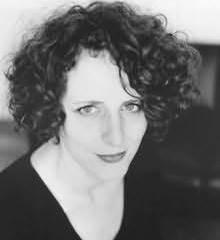
Maggie O'Farrell

Maggie O'Farrell Quotes

Author

Filter quotes by topic

Famous Maggie O'Farrell Quotes

“The role you've been ascribed in childhood can twist or break apart or seem outgrown, especially when you have your own family and begin to see your own childhood from a different angle. You remember. You reassess. I think that was the kernel of the novel for me. This idea that you change but that your family, the people you were born into, might find that change hard to accept. You no longer fit the mold you've always been ascribed. When the adult children in the book converge back on their small family home there's a sense that they don't fit there anymore.”

“While I was writing the book, one of my children was diagnosed with dyslexia. Dyslexia is a very tiny word for a wide-ranging neurological condition that affects different people in different ways. But I was reading an awful lot about it, to try and find ways of helping my child. I think a lot of fiction comes from this desire to confront unanswerable questions, and it's heartbreaking to see your child, a bright child, struggling so much with something that others are finding so easy. It's such an assault to the child's self-esteem and, as a mother, it's hard to watch.”

“All the time I was plowing through books on dyslexia, I found myself asking: what if, what if? What if you were a kid the 1950s with this condition, when there were no books on it, when there was no understanding of it. I remember kids in my class at school who just didn't seem to progress in their reading. There was no extra help. People just thought, "Oh, he or she isn't so bright, or they're obstinate."”

“For a while I used to listen to those whispers about babies costing you books, and Cyril Connolly's loathsome quote that "There is no more somber enemy of good art than the pram in the hall." But it's rubbish. Absolute rubbish. A huge amount of your work is done when you're not at your desk. Knotty problems that you need your unconscious to solve. So it can be helpful to walk away and focus on other things and it can be helpful to be a bit harassed in your daily life, to be hungry for time to write.”

“My husband, William Sutcliffe, the writer, is my first reader and in many ways my most important. That initial reading of the manuscript is crucial and irreplaceable and you want them to approach it as someone in a bookshop might, not knowing much about it. So I've got into this pattern of not telling Will anything about the book I'm working on. He often knows nothing about the book I'm working on at all until I give him the whole manuscript and ask him to read it. The book I'm working on at the moment he knows nothing about. No one does.”