Quotessence
Home / Authors / Martin Filler
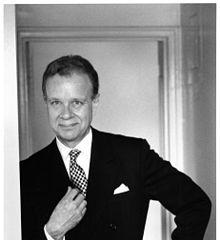
Martin Filler

Martin Filler Quotes

Author

Filter quotes by topic

Famous Martin Filler Quotes

“Museum architectural search committees have invariably included the Kimbell in their international scouting tours of exemplary art galleries (a practice pioneered by Velma Kimbell, the founder’s widow, in 1964). Those groups no doubt respond to the Kimbell with suitable reverence, but given the buildings they later commissioned, many post-Bilbao museum patrons obviously wanted something quite different. The disparity between Kahn’s museums and recent examples of that genre parallels the discrepancy he saw between postwar Modernism and ancient Classicism: “Our stuff looks tinny compared to it.” At a time when commercial values are systematically corrupting the museum - one of civilized society’s most elevating experiences - the example of Kahn, among the most courageous and successful architectural reformers of all time, seems more relevant and cautionary than ever.”

“Nineteenth- and early-twentieth-century exponents of prefabrication were certain it would supplant age-old traditions of individualized design and handcrafted construction. The building art would be revolutionized by freeing designers and construction workers from repetitive tasks, and democratized by making high-style architecture more affordable.”

“The tall building, concentrating man in one place more densely than ever before, similarly concentrates the dilemma of our public architecture at the end of the twentieth century: whether the new forms made possible by technology are doomed by the low calculations of modern patrons and their architects.”

“Architecture traditionally has been the slowest of art forms. It was not unusual for great cathedrals to take centuries to complete, with stylistic changes from Romanesque to Gothic or Renaissance to Baroque as common as the addition of chapels or spires. But because the function remained the same, the form could be flexible and its growth organic.”

“Cost overruns are not uncommon in architecture, particularly for designs that depart from structural or technological norms, or demand a finer quality of execution than commercial schemes - conditions typical of buildings for cultural institutions. Budgets are exceeded for many reasons, not all of them within an architect's control.”

“Experimental architecture by its very nature is more prone to the depredations of time and natural elements than buildings made from conventional materials through traditional methods. Avant-garde architects often simply do not know how the products of their imagination will perform when implemented, especially if untested components are involved.”