Quotessence
Home / Authors / Meg Wolitzer Books
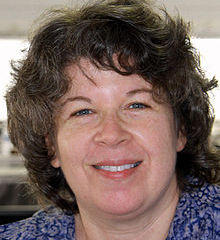
Meg Wolitzer

Meg Wolitzer Books

Writer

Belzhar

A source page for quotes linked to Meg Wolitzer.
0 quotes

Sleepwalking

A source page for quotes linked to Meg Wolitzer.

0 quotes

The Position

A source page for quotes linked to Meg Wolitzer.

0 quotes

The Uncoupling

A source page for quotes linked to Meg Wolitzer.

0 quotes

The Wife

A source page for quotes linked to Meg Wolitzer.

0 quotes

Related Quotes

“You could say that cleaning someone else’s house was a shit job. That it was disgusting to be entangled in someone else’s habits and ways, finding nail clippings—finger and toe—and little fluffy hair nests and partly squeezed tubes of cortisone cream or even lube, all of it evidence of a life you really didn’t want to think about. But you could also just say that it was work. And that work was admirable, even if it was hard or unappealing or undersung, or often maddeningly underpaid if you were female, as Greer used to remind him.”

“She understood that it had never just been about talent: it had also always been about money. Ethan was brilliant at what he did, and he might well have made it even if Ash’s father hadn’t encouraged him, but it really helped that Ethan had grown up in a sophisticated city, and that he had married into a wealthy family. Ash was talented, but not all that talented. This was the thing that no one said, not once. But of course it was fortunate that Ash didn’t have to worry about money while trying to think about art. Her wealthy childhood had given her a head start, and now Ethan had picked up where her childhood had left off.”

“Maybe the secret truth about death is that dead people are whisked away from their current lives and forced to live somewhere else far away—a process similar to reincarnation but taking place not in the future but now. A sort of mortality-based witness protection program. And if you found them they would look the same as they always had. If only you knew where to find them. If only you knew where to look.”

“For a long time he’d been periodically preoccupied by the idea that when someone you loved died, you could spend the rest of your life searching the world for that person and yet you would never, ever find him or her, no matter how many obscure places you went to, no matter how many caves you slipped into, or curtains you parted, or houses you entered. The dead person truly no longer existed, and while as a matter of science this fact seemed so simple, it was unaccountably hard to accept it when the person was someone you loved. But the thing was, after someone you loved died, the people you still could see—a.k.a., the living—might occasionally almost seem to be the person you longed for. There would be a startle of similarity, a flash of familiar head-shape or squirt of laughter, and you would whip around so hard, only to find a person who was not in fact the right person at all.”

“Their hands were on each other—on Zee with her curated boyish look and Noelle with her carefully feminine look that was slightly tempered by the nearly shaved head and prominent hipbones and the careful comportment, giving her the quality of one of those artist’s mannequins. The arms and leges could be rearranged any way you liked, link by link, and this was what sex was too, when power was fluid. You could rearrange the other person, and the could rearrange you.”

“One morning, when she was in bed with Harry in his hotel room, he tapped Faith lightly on the nose and said, “You’ve got a big honker, don’t you. But you’re so sexy, you can carry it.” She said nothing. It h rut her, not because it was untrue—she did have a strong nose, and it did look pretty good on her. It hurt her because she had been lying relaxed with him, similar to the way her childhood dog Lucky would sometimes lie in deep sleep on her back, paws up and dipped at the wrist. Her dog, lying like that, was happy in her dogfish openness. Which, Faith thought, was all she herself really wanted when she went to bed with someone. To lie exposed and free and unself-conscious.”

“She wasn’t one of those girls who seemed to be everywhere, hands on hips, those girls who were described in certain books and movies as being “spitfires,” or, later on, “kickass.” Even now, at college, there were girls like this, fuck-you confident and assured of their place in the world. Whenever they came upon resistance in the form of outright sexism or even more generic grossness, they either vanquished it or essentially rolled their eyes and acted as if it was just too stupid for them to acknowledge.”

“There were the signed, spiral-bound Spirit-in-the-Woods yearbooks from three summers in a row and the aerial photograph of everyone at camp the second summer. In it, Ethan's feet were planted on Jule's head, and Jule's feet were planted on Goodman's head, and so on and so on. And didn't it always go like that-body parts not quite lining up the way you wanted them to, all of it a little bit off, as if the world itself were an animated sequence of longing and envy and self-hatred and grandiosity and failure and success, a strange and endless cartoon loop that you couldn't stop watching, because, despite all you knew by now, it was still so interesting.”

“No one had told her this would happen, that her girlishness would give way to the solid force of wifehood, motherhood. The choices available were all imperfect. If you chose to be with someone, you often wanted to be alone. If you chose to be alone, you often felt the unbearable need for another body - not necessarily for sex, but just to rub your foot, to sit across the table, to drop his things around the room in a way that was maddening but still served as a reminder that he was there.”

“Being an adult child was an awkward, inevitable position. You went about your business in the world: tooling around, giving orders, being taken seriously, but there were still these two people lurking somewhere who in a split second could reduce you to nothing. In their presence, you were a big-headed baby again, crawling instead of walking.”

“And I also know that pain can seem like an endless ribbon. You pull it and you pull it. You keep gathering it toward you, and as it collects, you really can't believe that there's something else at the end of it. Something that isn't just more pain. But there's always something else at the end; something at least a little different. You never know what that thing will be, but it's there.”

“But it's never just been the journals that have made the difference, I don't think. It's also the way the students are with one another . . . the way they talk about books and authors and themselves. Not just their problems, but their passions too. The way they form a little society and discuss whatever matters to them. Books light the fire-whether it's a book that's already written, or an empty journal that needs to be filled in.”

“"Unputdownable" is, I suppose, something we all dream of, maybe without knowing it. I realized, some time ago, that a novel can hold a lot, and it made sense that this one was not of the sleek and economical variety, but instead the "full" type. Novel as piñata. And the reader does the whacking. I had a central idea, which is to look at what happens to talent over time.”

“Objectifying your own novel while writing it never really helps. Instead, I guess while you're writing you need to think: This is the novel I want to write. And when you're done you need to think: This is what the novel I wanted to write feels like and reads like and looks like. Other people might call it sweeping or small, but it's the book you chose.”

“You stayed around your children as long as you could, inhaling the ambient gold shavings of their childhood, and at the last minute you tried to see them off into life and hoped that the little piece of time you’d given them was enough to prevent them from one day feeling lonely and afraid and hopeless. You wouldn’t know the outcome for a long time.”