Quotessence
Home / Authors / Parker J. Palmer
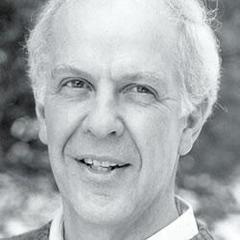
Parker J. Palmer

Parker J. Palmer Quotes

Author

Filter quotes by topic

Famous Parker J. Palmer Quotes

“We continually make decisions in private which affect the commonweal, as the ecologists (to take but one example) have shown us. When I keep my house warmer than it needs to be, I consume fuel which might help someone else keep warm, or keep a job. When the food I eat is high on the protein chain I contribute to a maldistribution of protein around the world. When I teach my children to be primarily concerned with private gain, I diminish the ranks of public leadership in the rising generation.”

“In a true community we will not choose our companions, for our choices are so often limited by self-serving motives. Instead, our companions will be given to us by grace. Often they will be persons who will upset our settled view of self and world. In fact, we might define true community as the place where the person you least want to live with always lives”

“The answer comes to me through studying the lives of the Rosa Parks and the Vaclav Havels and the Nelson Mandelas and the Dorothy Days of this world. These are people who have come to understand that no punishment that anybody could lay on us could possibly be worse than the punishment we lay on ourselves by conspiring in our own diminishment, by living a divided life, by failing to make that fundamental decision to act and speak on the outside in ways consonant with what we know to be true on the inside.”

“In my own life, as winters turn into spring, I find it not only hard to cope with mud but also hard to credit the small harbingers of larger life to come, hard to hope until the outcome is secure. Spring teaches me to look more carefully for the green stems of possibility; for the intuitive hunch that may turn into a larger insight, for the glance or touch that may thaw a frozen relationship, for the stranger's act of kindness that makes the world seem hospitable again.”

“Our deepest calling is to grow into our own authentic self-hood, whether or not it conforms to some image of who we ought to be. As we do so, we will not only find the joy that every human being seeks--we will also find our path of authentic service in the world.”

“The academic bias against subjectivity not only forces our students to write poorly ("It is believed...," instead of, "I believe..."), it deforms their thinking about themselves and their world. In a single stroke, we delude our students into believing that bad prose turns opinions into facts and we alienate them from their own inner lives.”

“Vocation does not come from willfulness. It comes from listening. I must listen to my life and try to understand what it is truly about-quite apart from what I would like it to be about-or my life will never represent anything real in the world, no matter how earnest my intentions…..Before I can tell my life what I want to do with it, I must listen to my life telling me who I am. I must listen for the truths and values at the heart of my own identity, not the standards by which I must live-but the standards by which I cannot help but live if I am living my own life.”

“Community cannot take root in a divided life. Long before community assumes external shape and form, it must be present as seed in the undivided self: only as we are in communion with ourselves can we find community with others. Community is an outward and visible sign of an inward and invisible grace, the flowing of personal identity and integrity into the world of relationships.”

“No scientist knows the world merely by holding it at arm's length: if we ever managed to build the objectivist wall between the knower and the known, we could know nothing except the wall itself. Science requires an engagement with the world, a live encounter between the knower and the known. That encounter has moments of distance, but it would not be an encounter without moments of intimacy as well. Knowing of any sort is relational, animated by a desire to come into deeper community with what we know.”

“There's often a distressing disconnect between the good words we speak and the way we live our lives. In personal relations and politics, the mass media, the academy and organized religion, our good words tend to float away even as they leave our lips, ascending to an altitude where they neither reflect nor connect with the human condition. We long for words like love, truth, and justice to become flesh and dwell among us. But in our violent world, it's risky business to wrap our frail flesh around words like those, and we don't like the odds.”