Quotessence
Home / Authors / Parker J. Palmer
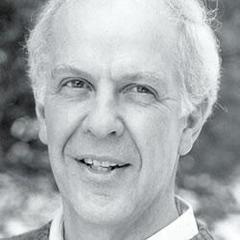
Parker J. Palmer

Parker J. Palmer Quotes

Author

Filter quotes by topic

Famous Parker J. Palmer Quotes

“First, the subjects we teach are as large and complex as life so our knowledge of them is always flawed and partial. No matter how we devote ourselves to reading and research, teaching requires a command of content that always eludes our grasp. Second, the students we teach are larger than life and even more complex. To see them clearly and see them whole and respond to them wisely in the moment requires a fusion of Freud and Solomon that few of us achieve.”

“People are always asking, "Is this person in front of me the same on the inside as he or she appears to be on the outside? Is there congruence between what's within that person and the words and actions I'm viewing and hearing externally?" Children ask that about their parents; students ask it about their teachers; parishioners ask it about their pastors and priests; employees ask it about their bosses; and in a democracy, citizens ask it about their political leaders.”

“If we want to grow as teachers -- we must do something alien to academic culture: we must talk to each other about our inner lives -- risky stuff in a profession that fears the personal and seeks safety in the technical, the distant, the abstract.”

“I now understand what Nelle Morton meant when she said that one of the great tasks in our time is to "hear people to speech." Behind their fearful silence, our students want to find their voices, speak their voices, have their voices heard. A good teacher is one who can listen to those voices even before they are spoken-so that someday they can speak with truth and confidence.”

“In classical understanding, education is the attempt to "lead out" from within the self a core of wisdom that has the power to resist falsehood and live in the light of truth, not by external norms but by reasoned and reflective self-determination. The inward teacher is the living core of our lives that is addressed and evoked by any education worthy of the name.”

“Every good teacher and every good parent has somehow learned to negotiate the paradox of freedom and discipline. We want our children and our students to become people who think and live freely, yet at the same time we know that helping them become free requires us to restrict their freedom in certain situations.”

“In a culture of technique, we often confuse authority with power, but the two are not the same. Power works from the outside in, but authority works from the inside out. . . . I am painfully aware of the times in my own teaching when I lose touch with my inner teacher and therefore with my own authority. In those times I try to gain power by barricading myself behind the podium and my status while wielding the threat of grades. . . . Authority comes as I reclaim my identity and integrity, remembering my selfhood and my sense of vocation.”

“... circles of trust ... are a rare form of community - one that supports rather than supplants the individual quest for integrity - that is rooted in two basic beliefs. First, we all have an inner teacher whose guidance is more reliable than anything we can get from a doctrine, ideology, collective belief system, institution, or leader. Second, we all need other people to invite, amplify, and help us discern the inner teacher's voice.”