Quotessence
Home / Authors / Paul F. Tompkins Books
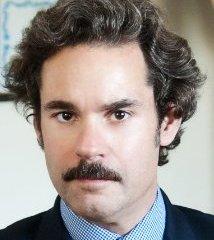
Paul F. Tompkins

Paul F. Tompkins Books

Comedian

No books found for this author.

Related Quotes

“When I was 16, I took the written driving test, just like everybody else did, and I passed it. Then the first time I was behind the wheel of a car, when I was a kid, it kind of freaked me out. I've always been a very anxious student of anything, and so not being able to process things quickly enough, feeling overwhelmed, I just got freaked out and so I just never tried again.”

“I came from a big family, with not enough attention. It's classic. I wasn't the baby, but was second to last. It's absolutely the same story that most people have in this [film] business, they're the middle children. I've encountered some people, and it's weird to me, that they were the youngest in their family. I don't understand how that works, they got the attention.”

“In the clubs, the entertainment and the restaurant business are at war with each other. You get crowds that are not the greatest, and it becomes like a babysitting job, rather than doing what you want to do. I have a more deliberate pacing in my act, and having a half interested audience is death. They have to hear what I'm saying for it to pay off.”

“I was going to say it's pretty bad these days, but I actually think it's pretty much the same as it's always been: There are a few really great shows on, and a bunch of garbage. That's the nature of the beast. It's always going to be that way as long as the networks try to second-guess what the American public will like. I wish that they'd just put on what they think is good rather than what they think people will sit through. I bet they'd have the same success rate, but at least the shows that survived would be better.”

“The difference when I'm writing a story versus writing a joke is that writing a joke is so much more about the structure and it's less about the conversation. To me, the thing that I love about stand-up is the intimacy between performer and audience.To get it even more conversational was something that really appealed to me and that I really enjoyed doing. My early experiments with it, with just telling a story from my life on stage, it was so satisfying to do. And seemingly for the audience as well. It's a different thing, and it's a different feeling and a different vibe.”

“To achieve the intimacy between performer and audience in storytelling, I feel like I have to let the audience in on my emotional state, not just, "Here's a story I'm going to tell by rote, and you're just going to listen to it, because I'm such a wonderfully entertaining fellow." It's the idea of sharing enough of myself that it's not just all about, "Look at me, look at me." There's an element to it of, "You understand what I'm talking about, right? You've been in this place that I've been in," which makes it a richer experience.”

“Now I don't care what people think. I did some internet campaign where I was the voice of a puppet for Ford Focus ads because they were paying me a lot of money to do it, it was a very easy gig, but then the bonus was, it turned out to be an enormous amount of fun. I've learned not to turn my nose up at things just because they're not what other people might consider cool to do. Because I've also matured enough to know, you never know where these things are going to lead, and you never know what the experience is going to be like.”

“To have nice interactions with people is a better than to make anyone uncomfortable, than to try to fill up some kind of lull. Like anybody else, there's times when maybe I don't feel like talking with other people. You don't have to be in show business to not feel like making small talk sometimes. But we kind of are all in this together. It makes things easier - it just makes life easier, if we're all nice to each other. I'm sure that sounds terribly corny, but honestly, it's one of those simple things that it's so simple, it's true, and it's so true that it's simple.”

“If the idea is you're working at a job solely to pay the bills because you have ambitions to do something else, if you're not actively trying to do that other thing, you've gotta make sure you're doing that. Sometimes you've gotta take away your own safety net. But if you feel miserable in a day job, in any job, get out of that. Look for something else. Stay in that job until you have the other thing set up, and then go to that other thing. But sometimes you've just got to jump out with a parachute and trust that you're going to land someplace safe.”

“With stand-up you meet almost constant rejection. You put yourself out there with your thoughts and your ideas, and you think they're funny, and you hope other people think they're funny too. The only way you're going to find out is when you do it and what the reaction is going to be. So if you're not prepared for that, if you're not willing to go along with that, it's going to be a rough road. But beyond stand-up, in terms of auditioning for acting roles, you don't get most of the roles you audition for - you get a precious few.”

“I meet Daniel Day-Lewis. He's just sitting in a chair on the set. Now, I had been told that Daniel Day-Lewis was kind of an intense person. And he's really not. He's really THE MOST INTENSE PERSON THAT HAS EVER EXISTED ON THE PLANET OF EARTH. He's not doing anything, he's just sitting in a chair, and I am terrified of him as if a jungle cat has wandered onto the set, like- WHOA! What do we do! Are we supposed to move around a lot or stay perfectly still?! What are the rules of Daniel Day-Lewis?!”