Quotessence
Home / Authors / Rudolf Rocker
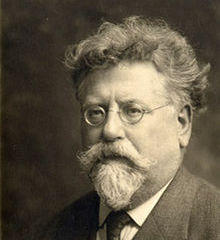
Rudolf Rocker

Rudolf Rocker Quotes

Writer

Filter quotes by topic

Famous Rudolf Rocker Quotes

“Theoretically it is, indeed, asserted that the relation between employer and employee is based upon a contract for the accomplishment of a definite purpose. The purpose in this case is social production. But a contract has meaning only when both parties participate equally in the purpose. In reality, however, the worker has today no voice in determining production, for this is given over completely to the employer. The consequence is that the worker is debased by doing a thousand things which constantly serve only to injure the whole community for the advantage of the employer.”

“Meanwhile, two other great currents in political thought, had a decisive significance on the development of socialist ideas: Liberalism, which had powerfully stimulated advanced minds in the Anglo-Saxon countries, Holland and Spain in particular, and Democracy in the sense. to which Rousseau gave expression in his Social Contract, and which found its most influential representatives in the leaders of French Jacobinism. While Liberalism in its social theories started off from the individual and wished to limit the state's activities to a minimum, Democracy took its stand on an abstract collective concept, Rousseau's general will, which it sought to fix in the national state. Liberalism and Democracy were pre-eminently political concepts, and since most of the original adherents of both did scarcely consider the economic conditions of society, the further development of these conditions could not be practically reconciled with the original principles of Democracy, and still less with those of Liberalism. Democracy with its motto of equality of all citizens before the law, and Liberalism with its right of man over his own person, both were wrecked on the realities of capitalist economy. As long as millions of human beings in every country have to sell their labour to a small minority of owners, and sink into the most wretched misery if they can find no buyers, the so-called equality before the law remains merely a pious fraud, since the laws are made by those who find themselves in possession of the social wealth. But in the same way there can be no talk of a right over one's own person, for that right ends when one is compelled to submit to the economic dictation of another if one does not want to starve.”

“Freedom is the very essence of life, the impelling force in all intellectual and social development, the creator of every new outlook for the future of mankind. The liberation of man from economic exploitation and from intellectual and political oppression, which finds its finest expression in the world-philosophy of Anarchism, is the first prerequisite for the evolution of a higher social culture and a new humanity.”

“Anarchism is a definite intellectual current in the life of our times, whose adherents advocate the abolition of economic monopolies and of all political and social coercive institutions within society. In place of the present capitalistic economic order Anarchists would have a free association of all productive forces based upon co-operative labour, which would have as its sole purpose the satisfying of the necessary requirements of every member of society, and would no longer have in view the special interest of privileged minorities within the social union.”

“Anarchism is no patent solution for all human problems, no Utopia of a perfect social order, as it has often been called, since on principle it rejects all absolute schemes and concepts. It does not believe in any absolute truth, or in definite final goals for human development, but in an unlimited perfectibility of social arrangements and human conditions which are always straining after higher forms of expression, and to which for this reason one can assign no definite terminus nor set any fixed goal.”