Quotessence
Home / Authors / Rudolf Rocker
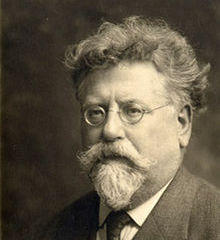
Rudolf Rocker

Rudolf Rocker Quotes

Writer

Filter quotes by topic

Famous Rudolf Rocker Quotes

“The will to power which always emanates from individuals or from small minorities in society is in fact a most important driving force in history. The extent of its influence has up to now been regarded far too little, although it has frequently been the determining factor in the shaping of the whole of economic and social life.”

“Modern Anarcho-Syndicalism is a direct continuation of those social aspirations which took shape in the bosom of the First International and which were best understood and most strongly held by the libertarian wing of the great workers' alliance.”

“Freedom is the very essence of life, the impelling force in all intellectual and social development, the creator of every new outlook for the future of mankind. The liberation of man from economic exploitation and from intellectual and political oppression, which finds its finest expression in the world-philosophy of Anarchism, is the first prerequisite for the evolution of a higher social culture and a new humanity.”

“So long as millions of human beings in every country has to sell their labour-power to a small minority of owners, and to sink into the most wretched misery if they could find no buyers, the so called “equality before the law” remains a pious fraud, since the laws are made by those who find themselves in possession of the social wealth. But in the same way there can also be no talk of a “right over one's own person,” for that right ends when one is compelled to submit to the economic dictation of another if he does not want to starve.”

“Anarchism is a definite intellectual current in the life of our times, whose adherents advocate the abolition of economic monopolies and of all political and social coercive institutions within society. In place of the present capitalistic economic order Anarchists would have a free association of all productive forces based upon co-operative labour, which would have as its sole purpose the satisfying of the necessary requirements of every member of society, and would no longer have in view the special interest of privileged minorities within the social union.”

“For the anarchist, freedom is not an abstract philosophical concept, but the vital concrete possibility of every human being to bring to full development all the powers, capacities and talents with which nature has endowed them, and turn them to social account.”

“Anarchism is no patent solution for all human problems, no Utopia of a perfect social order, as it has often been called, since on principle it rejects all absolute schemes and concepts. It does not believe in any absolute truth, or in definite final goals for human development, but in an unlimited perfectibility of social arrangements and human conditions which are always straining after higher forms of expression, and to which for this reason one can assign no definite terminus nor set any fixed goal.”

“Power always acts destructively, for its possessors are ever striving to lace all phenomena of social life into a corset of their laws to give them a definite shape. Its mental expression is dead dogma; its physical manifestation of life, brute force. This lack of intelligence in its endeavours leaves its imprint likewise on the persons of its representatives, gradually making them mentally inferior and brutal, even though they were originally excellently endowed. Nothing dulls the mind and soul of man as does the eternal monotony of routine, and power is essentially routine.”

“Culture is not created by command. It creates itself, arising spontaneously from the necessities of men and their social cooperative activity. No ruler could ever command men to fashion the first tools, first use fire, invent the telescope and the steam engine, or compose the Iliad. Cultural values do not arise by direction of higher authorities. They cannot be compelled by dictates nor called into life by the resolution of legislative assemblies.”