Quotessence
Home / Authors / Sena Jeter Naslund Books
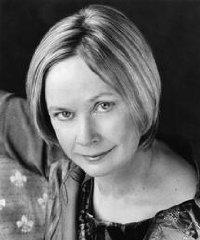
Sena Jeter Naslund

Sena Jeter Naslund Books

Writer

Abundance

A source page for quotes linked to Sena Jeter Naslund.
0 quotes

Four Spirits

A source page for quotes linked to Sena Jeter Naslund.

0 quotes

Related Quotes

“As a girl rebelling against my father’s dogma, I had scoffed at Job for accepting God’s consolation of a new wife and new children. But I, most Joblike, when Giles was dead, embraced Kit, and when Kit conveyed that he was not coming back, it was the messenger himself, Ahab, whom I immediately loved. If Mother and Liberty were gone, then here was Susan to unburden me of love. Not to be loved but to love lightened my load of grief and gave value and direction to my life.”

“What, in nature," Kit asked, "is the most beautiful thing you've seen? Or the most terrible?" "The Dismals," Giles answered promptly. "A beautiful aberration in the lay of the land--North Alabama. A section mysteriously lowered, strewn with boulders, ferny, mossy, cooler--the vegetation, they say, typical of Canada. There the creek runs clear, but all other Alabama rivers and waterways are muddy with sediment. I even like the name--the Dismals. An eternal place, disjunct with the climate, the time, and its location." "You think being dismal is an attractive association with eternity?" I asked. "It is a cool Eden in the Southern summer heat. What's yours, Una?" "The Kentucky hills in spring. Layers of pink and white--redbud and dogwood." "And you?" Giles asked Kit. "Stars," he said. That was all.”

“She sat still, I thought, and yet she traveled. And when one stitches, the mind travels, not the way men do, with ax and oxen through the wilderness, but surely our traveling counted too, as motion. And I thought of the patience of the stitches. Writing a book, I thought, which men often do, but women only rarely, has the posture of sewing. One hand leads, and the other hand helps. And books, like quilts, are made, one word at a time, one stitch at a time.”

“How the excitement comes upon me to tell it all! In the quest of writing, the heart can speed up with anticipation--as it does, indeed, during the chase itself of whales. I can swear it, having done both, and I will tell YOU though other writers may not. My heart is beating fast; I am in pursuit; I want my victory--that you should see and hear and above all feel the reality behind these words. For they are but a mask. Not the mask that conceals, not a mask that I would have you strike through as mere appearance, or, worse, deceitful appearance. Words need not be that kind of mask, but a mask such as the ancient Greek actors wore, a mask that expresses rather than conceals the inner drama. (But do you know me? Una? You have shipped long with me in the boat that is this book. Let me assure you and tell you that I know you, even something of your pain and joy, for you are much like me. The contract of writing and reading requires that we know each other. Did you know that I try on your mask from time to time? I become a reader, too, reading over what I have just written. If I am your shipbuilder and captain, from time to time I am also your comrade. Feel me now, standing beside you, just behind your shoulder?)”

“I turned from my window. Suddenly it seemed odd for my neighbors on both sides to have visitors while I had none. For the first time, I felt lonely at 'Sconset. "Let's cook," Frannie said energetically. "We will smell so good that they'll all come running." She picked up a bowl, filled it with apples from the barrel, and immediately began to cut them up. I put water to boil, got out cinnamon, cloves, nutmeg, lard, flour, sugar, salt, saleratus, vinegar, and all the other things for apple pies. We both laughed happily. How easy it is, we thought, to make a decision, to implement a remedy, to act.”

“Darkroom: A Memoir in Black and White is remarkable for its truth-telling about two important issues concerning Alabama's past and present: the civil rights movement and immigration. These stories, rendered through the words and eyes of a young Latina girl who came from Argentina to Marion, Alabama, are made vivid and immediate through Weaver's highly accessible drawings and dialogue. This is a book-about maturation, family, education, and social change-every schoolchild, parent, and citizen should experience.”