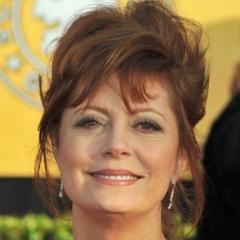
“Sometimes what happens is that, when you micromanage actors and moments, it just doesn't quite live.” SometimesMomentsHappensActors Author:Susan Sarandon
“The directors I consider really great have the ability to recognize when something's going in an unexpected direction and see it as a bonus and be able to go with it, as opposed to locking down what they thought was going to happen.” HappensAbleAbilityDirectorsUnexpectedReally GreatBonus Author:Susan Sarandon
“It's a miracle when something actually turns out well because there are so many ways for it to go wrong.” WayWellsTurnsMiracle Author:Susan Sarandon
“There have been a few little films I'd done like that that the studio just decided not to do much with, films like Anywhere but Here [1999] or Jeff, Who Lives at Home [2012]. Thank God people find them later and love them. I'm always really drawn to people who have seen these strange little films.” PeopleLittlesHas BeensDoneHomeFilmStrangeDecidedAnd LoveStudiosThank GodAnywhere But Here Author:Susan Sarandon
“You just can never count on a formula, on a movie that you think is going to be a big hit, and that's why you do it. You have to choose each one for what you think you'll learn and the fun you'll have. And maybe the cool people that you work with or a character that you're going to be able to explore ... You just keep your fingers crossed.” PeopleThinkingCharacterBigsAbleFunFingersFormulasCool PeopleFingers Crossed Author:Susan Sarandon
“I was very withdrawn and definitely played with dolls well into eighth grade. But I was the oldest of nine, and that grounded me in a way that I don't think I would have been grounded otherwise. So I was able to - or forced to - function practically. But I think, by nature, I was someone who lived in my head, in my imagination.” ThinkingWayWellsHas BeensAbleImaginationFunctionNineGradesGroundedMy ImaginationDollsEighth Grade Author:Susan Sarandon
“Being a Catholic, I was drawn to the mystery of the Latin and the smoke and the mirrors and all of that. That part of my disposition definitely did lend itself to finding my way to the back door of some artistic pursuit.” WayDoorsMysteryFindingsMirrorsCatholicPursuitSmokeArtisticMy WayLatinDispositionBack Doors Author:Susan Sarandon
“I always had a problem with original sin; I always had a problem with the exclusivity of the church and a lot of the things that the nuns taught me.” ProblemChurchSinTaughtOriginalsNunOriginal SinExclusivity Author:Susan Sarandon
“By the time I went to the Catholic University of America, which was the time the priests were all leaving with the nuns, the more I studied about the Bible and how it came about, the more I lost my faith.” AmericaLostCatholicLeavingUniversityPriestsNun Author:Susan Sarandon
“It didn't seem to have relevance, except in Central America or South America, countries where the church was connected to the fight of the people for economic justice. That's why it was so interesting to find myself back with Sister Helen [in Dead Man Walking], this new breed of nuns who were making a difference in the community.” PeopleMenCountrySeemsAmericaFightingCommunityDifferencesChurchJusticeInterestingEconomicWalkingSouthConnectedMaking A DifferenceRelevanceNunDead ManSouth AmericaHelenEconomic JusticeCentral America Author:Susan Sarandon
“When I grew up in the church, we were praying because the Communists were going to come over and hang you upside down on a cross, and I so wanted to be a good person, and I had these rosary beads that I would sleep with every night, and I just wanted the blessed Virgin to be on my side.” PersonsWantedNightSidesChurchSleepGrewPrayingGrew UpCrossesBlessedCommunistEvery NightVirginsGood PersonUpside DownBeadsRosaryBeing A Good PersonRosary Beads Author:Susan Sarandon
“One night I looked down and my rosary beads were glowing. And I realized that I did not want to see the blessed Virgin - I was terrified.” WantNightDown AndBlessedI RealizedTerrifiedVirginsOne NightGlowingBeadsRosaryRosary Beads Author:Susan Sarandon
“My aunt had given me these rosary beads that were glow-in-the-dark. So all of a sudden I look down and they're glowing, and I'm looking toward the door and thinking, "Oh, my God, I don't want anything to come though here. I'm not worthy, I'm not ready." I didn't want to be one of those kids who sees Our Lady of Fatima.” ThinkingWantLooksKidsGivenDarkDoorsReadyDown AndWorthyAuntGlowingNot ReadyBeadsRosaryNot WorthyGlow In The DarkRosary Beads Author:Susan Sarandon
“This Catholic thing, I think what it does is it makes a place for mystery in a person. And even when the faith goes away, there's that space where you crave something bigger than yourself. For me, that's kind of where art came in, after that.” ThinkingKindPersonsDoeArtSpaceMysteryBiggerCatholicCraveSomething Bigger Than Yourself Author:Susan Sarandon
“I did study drama at Catholic U, but the undergraduates weren't put in productions, really, except as extras, and it wasn't a hands-on kind of thing at all. I couldn't afford to go to another college. And my grandparents lived in D.C., so I was able to live with them, and that's how I was able to afford it at all.” KindHandsAbleStudyCollegeDramaCatholicProductionsExtrasGrandparent Author:Susan Sarandon
“I got married to Chris Sarandon, who was a graduate student, and he knew everything at that point, I thought, because he was older. He introduced me to poetry and black-and-white movies.” BlackWhiteStudentsMarriedGraduatesBlack And WhiteGraduate Students Author:Susan Sarandon
“I married him [Chris Sarandon] my senior year, and after I graduated, he went to the Long Wharf Theatre in New Haven, and I tagged along and was doing some local modeling and commercials and things like that. A woman named Jane Oliver, who handled Sylvester Stallone, saw Chris at the theater and asked him to come in and audition. We went in and auditioned - he needed someone to read with him. I read with him, and she said, "Well, why don't both of you come back in the fall."” YearsWellsLongSaidFallSawsHavensNeededMarriedTheaterTheatreLocalsSeniorAuditionsModelingJaneSenior YearTaggedNeeded Someone Author:Susan Sarandon
“I had school debt I had to pay off. Sometimes I would do commercials to get me through. And so I kept bumping along like that and learning different things. I knew I wanted to get out on my own. I was just super-curious, and I was a good listener. And that got me through.” DifferentSometimesWantedSchoolMy OwnPayDebtCuriousDifferent ThingsListenersGood Listener Author:Susan Sarandon
“I'd have conversations with the camera crew about what was going on in the scene, so that they were prepared to shoot it. I love the fact that when you work, you create this tribe.” FactsSceneConversationCamerasPreparedCrewTribes Author:Susan Sarandon
“You create this situation where you are so dependent on each other. That's especially true for film. In theater, the actor has much more say, much more control, for better or worse.” FilmActorsSituationTheaterDependentWhere You Are Author:Susan Sarandon
“I always think that the difference between film and theater is like the difference between masturbation and making love. Because, in film, you just have to get one moment right; you're practically by yourself. And in theater, you actually have to have a relationship with the audience.” ThinkingMomentsFilmDifferencesLove IsAudienceTheaterMaking LoveMasturbation Author:Susan Sarandon
“Theater for me is terrifying but much more rewarding, because you know what they're seeing. Film is all little bits and pieces. And you can do an amazing job, but if the camera isn't getting it, it doesn't work. And then other times when you feel you really weren't present, and then you see it and somehow it works. So there's a mystery, there's a strange collaboration that takes place with everybody.” IfsKnowsFeelsLittlesJobsFilmBitsCan DoPiecesSeeingMysteryStrangeLittle BitTheaterCamerasCollaborationBits And PiecesAmazing Job Author:Susan Sarandon
“I remember Anthony Perkins saying, "Real is not necessarily interesting." So real is not enough. But what happens as an actor is that you're really trained to listen and to be open and have empathy. It's such a natural consequence that you end up being more political. You can empathize with the mother whose kids are going to be sent to Iraq, or you can emphasize with the mother who is losing their child to a disease. How could you not then be active? So you're automatically drawn to that aspect in the rest of your life.” ChildrenRealEndsEnoughHappensKidsRememberPoliticalMotherActorsNaturalInterestingDiseaseLosingEmpathyConsequenceAspectIraqActiveRest Of Your LifeNatural Consequences Author:Susan Sarandon
“Acting is kind of a forced compassion, where you learn that given certain circumstances, you can feel and do things that you never thought yourself capable of. And so it stops you from being super-judgmental.” FeelsKindCertainGivenActingCompassionCircumstancesCapableJudgmental Author:Susan Sarandon
“I think you have to ask yourself, what is the point of the script? What is the script selling? Because all scripts are political, every story is political. It either challenges or reinforces some schism or stereotype. So what is the project going to say at the end of the day? What does it tell you about the world, or what does it challenge in terms of your world?” ThinkingWorldDoeEndsStoriesPoliticalAsksTermChallengesProjectsScriptsSellingThe End Of The DayStereotypeSchism Author:Susan Sarandon
“When Alan Rickman, a dear friend of mine, played villains, he always made it complicated. He didn't redeem what they did, but he made you feel that it was hard for them to be so horrible.” FeelsMadeHardMinesDearComplicatedHorribleMade ItVillainDear Friend Author:Susan Sarandon
“I think where you get into trouble - for instance the mixing of sex and violence - is when you're telling an audience that this horrible thing is enjoyable. The suffering just gets out of hand too much. It becomes pornographic.” ThinkingHandsSufferingSexAudienceToo MuchViolenceTroubleHorribleInstanceEnjoyableMixingHorrible Things Author:Susan Sarandon
“When I got the script for Thelma & Louise, when I met with the director, Ridley Scott, I said, "I don't want to do a revenge film. I'm not interested in doing that moment in the script after they shoot the truck, where it says they jump up and down and they're real happy about it".” WantSaidRealMomentsFilmMetsDirectorsDown AndScriptsRevengeThat MomentNot InterestedTruckUp And Down Author:Susan Sarandon
“In terms of our foreign policy, that's where we made a mistake after 9/11. Everyone's going, "Why, why, why," and there wasn't any investigation or learning from any of what we had been doing up to that time that had set us up.” MadeTermMistakePolicyForeign PolicyInvestigationMade A Mistake Author:Susan Sarandon
“9/11 just seemed to come out of the blue. And there were people asking questions, but then there were no answers. At some point, it just turned into, "We've got to do what we've got to do." And I think those are the moments when you grow, when you get the opportunity to try to figure out, exactly as you said, what price are you paying, and if it's worth that price.” PeopleIfsThinkingTryingSaidMomentsOpportunityGrowsAnswersFiguresAskingBlueAsking Questions Author:Susan Sarandon
“We were friends with Jonathan Demme. We were all down on the West Side of New York, and I think I met Kurt Vonnegut through Edith Demme. And then I was lucky to do Who Am I This Time? 1982, which was an adaptation of his short story that Jonathan Demme directed with Chris Walken and I, and that really cemented the friendship.” ThinkingStoriesSidesNew YorkMetsLuckyWestShort StoryAdaptationWest Side Author:Susan Sarandon
“Kurt Vonnegut wasn't a chatty guy, but when he spoke, it was always clear and very funny, in the way that he wrote, in a very specific kind of combination of word groupings and expressions that lived somewhere else.” WayKindGuyClearExpressionCombinationSpokesSomewhere Else Author:Susan Sarandon
“I've read some of Kurt Vonnegut letters from when he was young. He was a prisoner of war, and even when he was in his early twenties, there were things mentioned that showed up in his novels. One of the sweetest things in those letters was him wanting to be a writer but doubting himself, not having confidence in himself.” WarYoungNovelDoubtLettersTwentiesPrisonerSweetestPrisoner Of War Author:Susan Sarandon
“I've just come back from Vegas, and I was in on the caucus process. It's insane. What a mess. And also with these particular candidates who are running, so many times I said, "I just wish Kurt Vonnegut were alive." This is like something he would be writing. This is just crazy stuff. I would love to hear his take on it.” WritingSaidWould BeRunningWishStuffProcessAliveCrazyParticularInsaneMessCandidatesVegasLike SomethingCaucus Author:Susan Sarandon
“It's a very exciting time in the history of this country, to even see people responding to a different way of doing business and really wanting to make a change.” PeopleWayDifferentCountryExcitingDifferent WaysMaking ChangesResponding Author:Susan Sarandon
“I am optimistic. I think that there are a lot of women producing things, not necessarily in the studios. Actresses are putting stuff together. I think there are more stories about women of color [and] older women. But it is slim pickings.” ThinkingStoriesTogetherStuffColorStudiosActressesOptimisticSlimOlder Women Author:Susan Sarandon
“Most people are not affected by [the death penalty]. It's like how many people are actually sent to Iraq and Afghanistan? Such a small percentage.” PeopleIraqAffectedAfghanistanPenaltiesPercentagesDeath Penalty Author:Susan Sarandon
“We have more families at risk with the death penalty. It targets the voiceless, the poor, people of color. And so it's important just to understand what your government is doing and how much they are spending.” PeopleImportantGovernmentPoorRiskColorSpendingTargetPenaltiesPoor PeopleDeath PenaltyVoiceless Author:Susan Sarandon
“It's not enough just to be in a panic. We don't have the luxury to be depressed about Trump. We have to look at issues like health care and the price of pharmaceuticals, the $15 minimum wage and things that actually make a huge difference in a lot of people's lives. That's feminist.” PeopleLooksEnoughCareDifferencesIssuesHugeTrumpFeministLuxuryHealth CarePanicMinimumMinimum Wage Author:Susan Sarandon
“I just love the fact that that's the way life is. When something horrible happens, you do find yourself laughing in weird places in the midst of grief and crying in the supermarket when you see a cereal that somebody used to eat. There's just no way of guarding yourself one way or another. Everybody grieves differently, and there's no right or wrong way.” WayFactsHappensLife IsUsedGriefLaughingCryHorribleOne WayGrievingMidstFinding YourselfWrong WaySupermarketsCerealGuardingWeird Places Author:Susan Sarandon
“I'm always trying to have a good time on set because that's when things happen. That's when you're playful.” TryingHappensThings HappenGood TimesHaving A Good TimeAlways Trying Author:Susan Sarandon
“Everything's serendipitous and there's no way of knowing who's going to get sick or who's going to get hit by a bus or who's going to fall in love and who's going to get pregnant. All the things that happen, it's up for grabs so it's kind of an exercise in surrender in a way.” WayKindHappensFallKnowingExerciseSickFalling In LoveSurrenderBusPregnant Author:Susan Sarandon
“One of the first lessons I learned as a mom was to forgive myself for not being perfect and to try to prioritize what was really important. I had to really accept very early on that after a while, reading a script and finding the form for the class trip, it was hard to realize which one had priority at times. So I just had to say, "You're doing the best you can, and when you make a mistake, apologize. Your kids know that you love them."” TryingImportantKidsReadingRealizingPerfectMistakeAcceptingMomForgivingPrioritiesApologizingPrioritize Author:Susan Sarandon
“What is fabulous about gay marriage is that it redefines the gender designated jobs, then you throw in transgender and you don't just have the five primary colors of the crayons. We have to really look at what it means to be a man or a woman in a much more generous and creative way.” MenMeanCreativeGayGenderGenerousFabulousGay MarriageTransgenderCrayon Author:Susan Sarandon
“Every time you enter into a job it's a whole new universe. There's a new language with a new power structure. If you are in an all Black cast its a different dynamic, the same with an all male cast or a crew that is mainly women.” DifferentUniverseLanguageBlack Author:Susan Sarandon
“It is important to have a woman editor. Movie is an industry where it is predominantly women. Male editors might cut out pauses that are interesting, while a woman might not be afraid of that pause. Trying to do a movie with an editor who is not funny is impossible. There are certain talents that go with certain genders.” TryingImportantInterestingCuttingImpossibleTalentGender Author:Susan Sarandon
“There are many actresses that are working longer, because until you change the playing field and make it economically stronger for women, it's very difficult to say no to somebody when that's your only gig. If you're a producer, or if you have more power, you're going to be in a position to know that if you burn that bridge, there'll still be this bridge open. But still - when people ask me 'do you think your politics have decreased your chances of working, I say: 'In Hollywood, most of the prejudice has to do with if you're old or fat.' Power can't forgive that".” PeopleThinkingDifficultChancePrejudiceStrongerForgivingProducersAsk Me Author:Susan Sarandon
“I look forward to being older, when what you look like becomes less and less an issue and what you are is the point.” LooksAgeIssuesAging Author:Susan Sarandon
“When you start to develop your powers of empathy and imagination, the whole world opens up to you.” WorldWholeImaginationKindnessPowerEmpathyWhole WorldUp To YouEmpatheticCompassion And EmpathyNo Empathy Author:Susan Sarandon