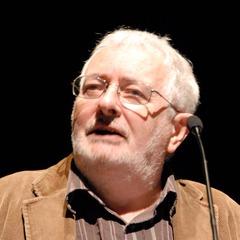
“In the pragmatist, streetwise climate of advanced postmodern capitalism, with its scepticism of big pictures and grand narratives, its hard-nosed disenchantment with the metaphysical, 'life' is one among a whole series of discredited totalities. We are invited to think small rather than big – ironically, at just the point when some of those out to destroy Western civilization are doing exactly the opposite. In the conflict between Western capitalism and radical Islam, a paucity of belief squares up to an excess of it. The West finds itself faced with a full-blooded metaphysical onslaught at just the historical point that it has, so to speak, philosophically disarmed. As far as belief goes, postmodernism prefers to travel light: it has beliefs, to be sure, but it does not have faith.” LifePhilosophyReligionFaithBeliefAtheismCapitalismIslamMetaphysicsPostmodernismWestern WorldPragmatismWestern CultureIslamic TerrorismIslamismIslamic FundamentalismGrand NarrativesPhilosophical Scepticism Book:The Meaning of Life Source: The Meaning of Life
“Not all of Derrida's writing is to everyone's taste. He had an irritating habit of overusing the rhetorical question, which lends itself easily to parody: 'What is it, to speak? How can I even speak of this? Who is this "I" who speaks of speaking?” WritingPhilosophyParodyRhetorical QuestionsJacques Derrida Author:Terry Eagleton
“To call ourselves historical beings is to say that we are constitutively capable of self-transcendence, becoming at one with ourselves only in death.” SoulPhilosophyBodyMarxismDualismHistorical Materialism Book:Materialism Source: Materialism
“The quarrel between science and religion, then, is not a matter of how universe came about, or which approach can provide the best "explanation" for it. It is a disagreement about how far back one has to go, though not in the chronological sense. For theology, science does not start far back enough - not in the sense that it fails to posit a Creator, but in the sense that it does not ask questions such as why there is anything in the first place, or why what we do have is actually intellible to us. Perhaps these are phony questions anyway; some philosophers certainly think so. But theologians, as Rowan Williams has argued, are interested in the question of why we ask for explanations at all, or why we assume that the universe hangs together in a way that makes explanations possible. Where do our notions of explanation, regularity, and intelligibility come from? How do we explain rationality and intelligibility themselves, or is this question either superfluous or too hard to answer? Can we not account for rationality because to do so is to presuppose it? Whatever we think of such queries, science as we know it is possible only because the world displays a certain internal order and coherence - possible, that is to say, for roughly aesthetic reasons.” PhilosophyScienceReligionUniverseTheology Book:Reason, Faith, and Revolution: Reflections on the God Debate Source: Reason, Faith, and Revolution: Reflections on the God Debate
“Another anti-theoretical stratagem is to claim that in order to launch some fundamental critique of our culture, we would need to be standing at some Archimedean point beyond it. What this fails to see is that reflecting critically on our situation is part of our situation. It is a feature of the peculiar way we belong to the world. It is not some impossible light-in-the-refrigerator attempt to scrutinize ourselves when we are not there. Curving back on ourselves is as natural to us as it is to cosmic space or a wave of the sea. It does not entail jumping out of our own skin. Without such self-monitoring we would not have survived as a species.” PhilosophyCultureCritical TheoryReflexivityAnti Theory Book:After Theory Source: After Theory
“If history, philosophy and so on vanish from academic life, what they leave in their wake may be a technical training facility or corporate research institute. But it will not be a university in the classical sense of the term, and it would be deceptive to call it one.” IfsMayPhilosophyWould BeTermTrainingResearchUniversityCorporateAcademicFacilityInstituteDeceptiveAcademic LifeTechnical Training Author:Terry Eagleton
“The study of history and philosophy, accompanied by some acquaintance with art and literature, should be for lawyers and engineers as well as for those who study in arts faculties.” ShouldWellsArtPhilosophyLiteratureStudyLawyerFacultyEngineersAcquaintance Author:Terry Eagleton