Quotessence
Home / Authors / Thomas Carlyle
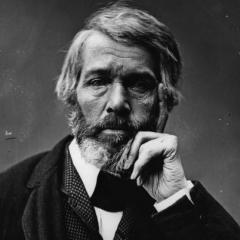
Thomas Carlyle

Thomas Carlyle Quotes

Philosopher

Filter quotes by topic

Famous Thomas Carlyle Quotes

“The great law of culture is, Let each become all that he was created capable of being; expand, if possible, to his full growth; resisting all impediments, casting off all foreign, especially all noxious adhesions, and show himself at length in his own shape and stature be these what they may.”

“Superstition! that horrid incubus which dwelt in darkness, shunning the light, with all its racks, and poison chalices, and foul sleeping draughts, is passing away without return. Religion cannot pass away. The burning of a little straw may hide the stars of the sky; but the stars are there and will reappear.”

“Poverty, we may say, surrounds a man with ready-made barriers, which if they do mournfully gall and hamper, do at least prescribe for him, and force on him, a sort of course and goal; a safe and beaten, though a circuitous, course. A great part of his guidance is secure against fatal error, is withdrawn from his control. The rich, again, has his whole life to guide, without goal or barrier, save of his own choosing, and, tempted, is too likely to guide it ill.”

“We are to remember what an umpire Nature is; what a greatness, composure of depth and tolerance there is in her. You take wheat to cast into the Earth's bosom; your wheat may be mixed with chaff, chopped straw, barn-sweepings, dust and all imaginable rubbish; no matter: you cast it into the kind just Earth; she grows the wheat, - the whole rubbish she silently absorbs, shrouds it in, says nothing of the rubbish.”

“When we can drain the Ocean into mill-ponds, and bottle up the Force of Gravity, to be sold by retail, in gas jars; then may we hope to comprehend the infinitudes of man's soul under formulas of Profit and Loss; and rule over this too, as over a patent engine, by checks, and valves, and balances.”

“The weakest living creature, by concentrating his powers on a single object, can accomplish something. The strongest, by dispensing his over many, may fail to accomplish anything. The drop, by continually falling, bores its passage through the hardest rock. The hasty torrent rushes over it with hideous uproar, and leaves no trace behind.”

“Give us, O give us the man who sings at his work! Be his occupation what it may, he is equal to any of those who follow the same pursuit in silent sullenness. He will do more in the same time . . . he will do it better . . . he will persevere longer. One is scarcely sensible to fatigue while he marches to music. The very stars are said to make harmony as they revolve in their spheres.”

“We were wise indeed, could we discern truly the signs of our own time; and by knowledge of its wants and advantages, wisely adjust our own position in it. Let us, instead of gazing idly into the obscure distance, look calmly around us, for a little, on the perplexed scene where we stand. Perhaps, on a more serious inspection, something of its perplexity will disappear, some of its distinctive characters and deeper tendencies more clearly reveal themselves; whereby our own relations to it, our own true aims and endeavors in it, may also become clearer.”