Quotessence
Home / Authors / Thomas Pogge
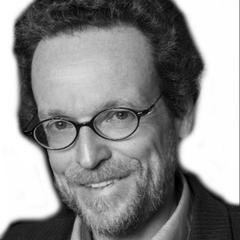
Thomas Pogge

Thomas Pogge Quotes

Philosopher

Filter quotes by topic

Famous Thomas Pogge Quotes

“The domestic power structure - how power is exercised in the United States, for instance - greatly influences the structure of international institutions. So, for example, the Clinton administration was very influential in shaping the WTO treaty, and, because of the way the US domestic political system works, this meant that corporations could use the US government to wield a huge influence.”

“The fact that oppressive and corrupt regimes can borrow money in the name of the whole country means that the country's future generations will be weighed down by interest and repayment burdens, even if the money has been frittered away in some frivolous way, embezzled or used for weapons to suppress the country's population.”

“The global financial crisis is a great opportunity to showcase and propagate both causal and moral institutional analysis. The crisis shows major flaws in the way the US financial system is regulated and, more importantly, in our political system, which is essentially a bazaar of legalized bribery where financial institutions can buy themselves the governmental regulations they want, along with the regulators who routinely receive lucrative jobs in the industry whose oversight had formerly been their responsibility, the so-called revolving-door practice.”

“Often vastly more important, international agreements are not routinely published in draft form or publicly debated, and civil society organizations and ordinary citizens often learn of important global institutional design decisions only after they have already been finalized and adopted. The only reliable way to be kept informed and to exert timely influence is by lobbying and paying the politicians and their negotiators.”

“By using general consumption PPPs, the World Bank is, in effect, saying to the poor: "Sure, you cannot buy as much food as the dollar value we attribute to your income would buy in the United States. But then you can buy much more by way of services than you could buy with this PPP equivalent in the United States." But what consolation is this? The poor do not buy services - they are services, on their luckier days.”

“You may know that in India now the Tata car is becoming all the rage; you can buy it for one lakh - $2000 dollars - it's very, very cheap. So India seems to be going the route that China went a few years ago and that developing countries all over the world seem to want to follow, namely, to rely on these personal vehicles, which is just an irrational way of organizing transport.”

“It is irrational to charge high prices for socially valuable innovations as this guarantees that they will be underutilized. It is much better to sell them at cost and then to reward the innovator in some other way. This is not always possible, because in some cases the value of an innovation is in the eye of the beholder; it's very difficult to value how much a new Madonna song is worth, for example. But in the case of medicines, green technologies and seeds in agriculture, such an alternative reward mechanism is fairly straightforward.”

“Companies are actually much better than governments and other bureaucracies at organizing in a holistically efficient way the extremely complex path from the examination of molecules all the way to the delivery of medicines to patients. Already in the conception and selection of research projects, companies would anticipate all the challenges down the line that they will need to overcome in order to achieve actual health impact. Bureaucratic organizations, by contrast, are notoriously bad at this sort of optimizing.”

“To improve global health, it's not enough just to have a really good new product and to obtain marketing approval. You still need to market the product and bring it to patients, follow up, create the infrastructure, and so on - the whole pipeline, the network. That's something that companies are extremely good at: organizing a whole pipeline in a cost-effective way.”

“If the Health Impact Fund were to be instituted, a single company would be in charge of a medical product all the way from its conception to the health improvements realized by actual patients. The company would be paid for health impact, and it would have to arrange the entire pipeline in between - all the steps of invention, of clinical testing, of getting marketing approval in many different countries, of wholesalers and retailers and prescriptions and so on - in a holistically optimal way.”