Quotessence
Home / Authors / Thomas Pogge
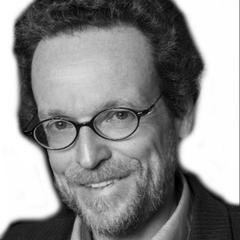
Thomas Pogge

Thomas Pogge Quotes

Philosopher

Filter quotes by topic

Famous Thomas Pogge Quotes

“The bottom quarter of the human population has only three-quarters of one percent of global household income, about one thirty-second of the average income in the world, whereas the people in the top five percent have nine times the average income. So the ratio between the averages in the top five percent and the bottom quarter is somewhere around 300 to one - a huge inequality that also gives you a sense of how easily poverty could be avoided.”

“I see a violation of human rights not in the mere fact that people don't have enough to eat and that they are very vulnerable, but I see it in the fact that the economic institutional order of the world is associated with this very persistent poverty and that different institutional arrangements at the supranational level could stop and even reverse the slide towards ever-greater income disparities.”

“The collective shortfall of the 3.08 billion people (47 percent of world population) who, in 2005, lived below $2.50 per day was $507 billion per annum, which indeed comes to about two-thirds of the present US military budget. This gives us a rough sense of how much the eradication of poverty would cost.”

“Our global institutional arrangements - the basic ground rules that govern our world economy - are human-made. They don't exist naturally, nor are they God-given. We make these rules, those of the WTO [World Trade Organization] Treaty for instance, which fill tens of thousands of pages. These words have been strung together by human beings and are also interpreted and enforced by human beings.”

“Feudalism is an economic system where a few people own all the land and the others have no option but to be serfs on such a feudal estate. We now condemn feudalism. We condemn not merely the feudal lords but we condemn the whole structure of rules that sustained feudalism. I am asking people to think similarly about the world economy.”

“The World Bank is the monopoly provider of poverty data and, partly due to a leadership change there, the World Bank's reporting has been heavily on the rosy side since about 2000. The Bank's cultivation of an upbeat picture affords a very interesting lesson in statistics and how you can, depending on which numbers you present and how you present them, create a more positive or more negative impression of the evolution of poverty.”

“Car prices play a large role in calculating PPPs even while they play no role whatsoever in the consumption or consumption needs of the poor. And the prices of rice, bread and beans play a small role in calculating PPPs even though they play a huge role in meeting the consumption needs of the poor. So the World Bank's method of comparing and converting everything at general purchasing power parities into US dollars is highly distorting within an exercise whose purpose it is to determine whether households are or are not capable of meeting their basic consumption needs.”

“In 88 poor countries for which we have data, in each and every one of the 88, the PPP for food shows that poor people can buy less food than you would expect from the PPP that the World Bank is using. The reason for this is obvious on reflection. It has to do with the fact that most foodstuffs are tradable commodities: basic foodstuffs, such as rice, flour and beans, can easily be conveyed across national borders and their prices will therefore roughly mirror the exchange rates among currencies.”

“By using general consumption PPPs, the World Bank is, in effect, saying to the poor: "Sure, you cannot buy as much food as the dollar value we attribute to your income would buy in the United States. But then you can buy much more by way of services than you could buy with this PPP equivalent in the United States." But what consolation is this? The poor do not buy services - they are services, on their luckier days.”

“You may know that in India now the Tata car is becoming all the rage; you can buy it for one lakh - $2000 dollars - it's very, very cheap. So India seems to be going the route that China went a few years ago and that developing countries all over the world seem to want to follow, namely, to rely on these personal vehicles, which is just an irrational way of organizing transport.”

“Economists operate with this image of the homo economicus, the rational economic agent, and while such agents are rare in the wider world, they are common in economics departments. Exemplifying the homo economicus paradigm, economists typically choose their research projects and hypotheses so as to promote their own careers, to maximize their lifetime income. This explains the astonishing pressures toward conformity in academic economics: how deviant views (except those by a few who have already achieved stardom) get crushed by an army of conformists.”

“Ordinary people like you and me can achieve very little on their own. We need to build support. Even if you are a thought leader and have some good ideas on how to make the world better, and even if you write five or ten books - that won't have much effect unless you have people who are willing to support your ideas.”

“In order to achieve something, in competition with the powerful and smartly wielded influence of corporations, we need to join forces and be as well-organized as they are. This does not come natural to us more intellectual types, as we tend to be averse to hierarchy and groupthink; we don't like to be part of anything like a disciplined and well-organized team or movement. But the alternative is to continue losing politically - which means continued failure to protect the world's poor, who are really bearing the brunt of our disorganization.”