Quotessence
Home / Quotes / Quote by Thomas Pogge

Quote by Thomas Pogge

“The World Bank is the monopoly provider of poverty data and, partly due to a leadership change there, the World Bank's reporting has been heavily on the rosy side since about 2000. The Bank's cultivation of an upbeat picture affords a very interesting lesson in statistics and how you can, depending on which numbers you present and how you present them, create a more positive or more negative impression of the evolution of poverty.”

Quote by Thomas Pogge

Author
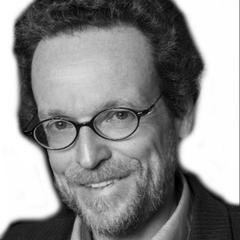
Thomas Pogge
Thomas Pogge

Thomas Pogge is a German-born American philosopher known for his contributions to ethics and political philosophy. His research focuses on issues of global justice, poverty, and inequality, particularly concerning human rights in developing countries. more

You May Also Like

“Purchasing power parities are not a reasonable method for comparing households across countries or currencies. The reason for this is simply that PPPs are sensitive to the prices of all the commodities, goods and services, that households are consuming worldwide, with each commodity weighted in the calculations according to its share in international household consumption expenditure.”

“Car prices play a large role in calculating PPPs even while they play no role whatsoever in the consumption or consumption needs of the poor. And the prices of rice, bread and beans play a small role in calculating PPPs even though they play a huge role in meeting the consumption needs of the poor. So the World Bank's method of comparing and converting everything at general purchasing power parities into US dollars is highly distorting within an exercise whose purpose it is to determine whether households are or are not capable of meeting their basic consumption needs.”

“In 88 poor countries for which we have data, in each and every one of the 88, the PPP for food shows that poor people can buy less food than you would expect from the PPP that the World Bank is using. The reason for this is obvious on reflection. It has to do with the fact that most foodstuffs are tradable commodities: basic foodstuffs, such as rice, flour and beans, can easily be conveyed across national borders and their prices will therefore roughly mirror the exchange rates among currencies.”

“Though people could, in principle, cross national borders to reach places where their work is more highly rewarded, they are in fact prevented from doing so. As a result, huge differences also persist in the price of labor, as you can see when you get a haircut in rural India or hire a driver or babysitter in Bolivia. You can easily buy such services at one-fiftieth the price you would pay in London, Hamburg or Manhattan.”

“By using general consumption PPPs, the World Bank is, in effect, saying to the poor: "Sure, you cannot buy as much food as the dollar value we attribute to your income would buy in the United States. But then you can buy much more by way of services than you could buy with this PPP equivalent in the United States." But what consolation is this? The poor do not buy services - they are services, on their luckier days.”

“To make a proper moral appraisal of the prevalence of severe poverty today, we should focus not on comparisons with times past, when the global average income was much lower, but on a comparison with what would be possible in our time, given the current global average income and level of technological and administrative development.”

“Think of US slavery in 1850, or the subjection of women. Both of these injustices could have been - and were! - defended by pointing out, quite correctly, that this situation of slaves and women had been improving throughout the preceding century. Slaves, in particular, were worked less hard, beaten and raped less frequently, better fed, and less often ripped apart from their families. So would a celebration of moral progress have been appropriate in 1850? Surely not. Slavery could have been and should have been abolished - then, if not before.”