Source: Citation and Examination of William Shakspeare, Euseby Treen, Joseph Carnaby and Silas Gough, Clerk: Before the Worshipful Sir Thomas Lucy, Knight, Touching Deer-stealing on the 19th Day of September in the Year of Grace 1582, Now First Published from Original Papers
Filter quotes by topic
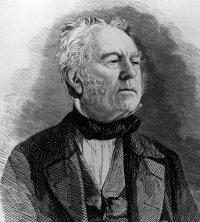
Famous Walter Savage Landor Quotes
“Political men, like goats, usually thrive best among inequalities.”
Source: Selections from the Writings of Walter Savage Landor
“Where power is absent we may find the robe of genius, but we miss the throne.”
Source: Imaginary conversations of Greeks and Romans
Source: Imaginary conversations of Greeks and Romans
Source: Imaginary Conversations of Literary Men and Statesmen: Richard I and the Abbot of Boxley. The Lord Brooke and Sir Philip Sidney. King Henry IV and Sir Arnold Savage. Southey and Porson. Oliver Cromwel and Walter Noble. Aeschines and Phocion. Queen Elizabeth and Cecil. King James I and Isaac Casaubon. Marchese Pallavicini and Walter Landor. General Kleber and some French officers. Bonaparte and the president of the senate. Bishop Burnet and Humphrey Hardcastle. Peter Leopold and the President Du
“And Modesty, who, when she goes, Is gone for ever.”
Source: Gebir, Count Julian: And Other Poems
“It is easy to look down on others; to look down on ourselves is the difficulty.”
Source: Selections from the Writings of Walter Savage Landor
Source: The works of Walter Savage Landor [ed. by J. Forster].
Source: The Works and Life of Walter Savage Landor: Dialogues in verse : Gebir. Acts and scenes. Hellenics
Source: Selections from the Writings of Walter Savage Landor
“Every good writer has much idiom; it is the life and spirit of language.”
Source: Imaginary conversations of Greeks and Romans
Source: Dialogues of sovereigns and statesmen
“Old trees in their living state are the only things that money cannot command.”
Source: Imaginary Conversations of Literary Men and Statesmen: Richard I and the Abbot of Boxley. The Lord Brooke and Sir Philip Sidney. King Henry IV and Sir Arnold Savage. Southey and Porson. Oliver Cromwel and Walter Noble. Aeschines and Phocion. Queen Elizabeth and Cecil. King James I and Isaac Casaubon. Marchese Pallavicini and Walter Landor. General Kleber and some French officers. Bonaparte and the president of the senate. Bishop Burnet and Humphrey Hardcastle. Peter Leopold and the President Du
Source: The Works of Walter Savage Landor
Source: Pericles and Aspasia
Source: The Works of Walter Savage Landor
Source: The works of Walter Savage Landor [ed. by J. Forster].
Source: Imaginary Conversations of Literary Men and Statesmen
“The foundation of domestic happiness is faith in the virtue of woman.”
“When a woman hath ceased to be quite the same to us, it matters little how different she becomes.”
Source: Indexes. Table of first lines. Imaginary conversations
Source: Heroic idyls, with additional poems
Source: The Works of Walter Savage Landor
Source: The Works of Walter Savage Landor
Source: Delphi Collected Poetical Works of Walter Savage Landor (Illustrated)
“The flame of anger, bright and brief, sharpens the barb of love.”
Source: Delphi Collected Poetical Works of Walter Savage Landor (Illustrated)
“Men, like nails, lose their usefulness when they lose their direction and begin to bend.”
Source: Delphi Collected Poetical Works of Walter Savage Landor (Illustrated)
“Great men lose somewhat of their greatness by being near us; ordinary men gain much.”
Source: Classical dialogues, Greek and Roman
“My thoughts are my company; I can bring them together, select them, detain them, dismiss them.”
Source: Imaginary conversations of Greeks and Romans
Source: Imaginary Conversations of Literary Men and Statesmen
“Many laws as certainly make men bad, as bad men make many laws.”
“No ashes are lighter than those of incense, and few things burn out sooner.”
Source: Classical conversations: being imaginary conversations among Greek, Roman and Modern personages of classic consequence in the history of human culture
“There is delight in singing, though none hear beside the singer.”
Source: Selections from the Writings of Walter Savage Landor
“Nothing is pleasanter to me than exploring in a library.”
Source: Pericles and Aspasia
“No truer word, save God's, was ever spoken, Than that the largest heart is soonest broken.”
Source: Poems
“When a cat flatters ... he is not insincere: you may safely take it for real kindness.”
Source: Classical conversations: being imaginary conversations among Greek, Roman and Modern personages of classic consequence in the history of human culture
Source: Imaginary conversations of Greeks and Romans
“A man's vanity tells him what is honor, a man's conscience what is justice.”
Source: Dialogues of sovereigns and statesmen
Source: Imaginary conversations of Greeks and Romans
“What is reading but silent conversation?”
Source: Imaginary Conversations of Literary Men and Statesmen
Source: Imaginary conversations of Greeks and Romans