Quotessence
Home / Authors / William J. Brennan Books
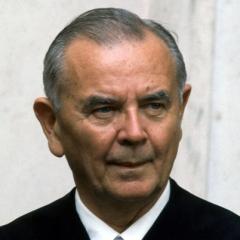
William J. Brennan

William J. Brennan Books

Former Associate Justice of the Supreme Court of the United States

No books found for this author.

Related Quotes

“Lawyers, before any other group, must continue to point out how the system is really working-how it actually affects real people. They must constantly demonstrate to courts and legislatures alike the tragic results of legal nonintervention. They must highlight how legal doctrines no longer bear any relation to reality, whether in landlord and tenant law, holder in due course law, or any other law. In sum, lawyers must bring real morality into the legal consciousness”

“We current Justices read the Constitution in the only way that we can: as Twentieth Century Americans. We look to the history of the time of framing and to the intervening history of interpretation. But the ultimate question must be, what do the words of the text mean in our time. For the genius of the Constitution rests not in any static meaning it might have had in a world that is dead and gone, but in the adaptability of its great principles to cope with current problems and current needs.”

“The door of the Free Exercise Clause stands tightly closed against any government regulation of religious beliefs as such. Government may neither compel affirmation of a repugnant belief, nor penalize or discriminate against individuals or groups because they hold views abhorrent to the authorities.”

“While the machinery of law enforcement and indeed the nature of crime itself have changed dramatically since the Fourth Amendment became part of the Nation's fundamental law in 1791, what the Framers understood then remains true today - that the task of combating crime and convicting the guilty will in every era seem of such critical and pressing concern that we may be lured by the temptations of expediency into forsaking our commitment to protecting individual liberty and privacy.”

“If there is a bedrock principle underlying the First Amendment, it is that the government may not prohibit the expression of an idea simply because society finds the idea itself offensive or disagreeable.”

“With respect to the death penalty, I believe that a majority of the Supreme Court will one day accept that when the state punishes with death, it denies the humanity and dignity of the victim and transgresses the prohibition against cruel and unusual punishment. That day will be a great day for our country, for it will be a great day for our Constitution.”

“If our free society is to endure, those who govern must recognize human dignity and accept the enforcement of constitutional limitations on their power conceived by the Framers . . . . Such recognition will not come from a technical understanding of the organs of government, or the new forms of wealth they administer. It requires something different, something deeper-a personal confrontation with the wellsprings of our society.”

“One area of law more than any other besmirches the constitutional vision of human dignity. . . . The barbaric death penalty violates our Constitution. Even the most vile murderer does not release the state from its obligation to respect dignity, for the state does not honor the victim by< emulating his murderer. Capital punishment's fatal flaw is that it treats people as objects to be toyed with and discarded. . . . One day the Court will outlaw the death penalty. Permanently.”