Quotessence
Home / Quotes / Quote by John Cassian

Quote by John Cassian

“...when we abandon visible riches... it is strange goods and not our own that we are leaving. And this is so even if we boast that we acquired them through our own efforts or that they were passed on to us as an inheritance. I say nothing is ours except what is in our hearts, what belongs to our souls, what cannot be taken away by anyone.”

Quote by John Cassian

Work

Conferences

This book explores the significance of conferences in shaping public discourse, fostering innovation, and promoting collaboration across diverse fields. It includes insights from experts and participants, offering a comprehensive view of the role conferences play in modern society. more

Author

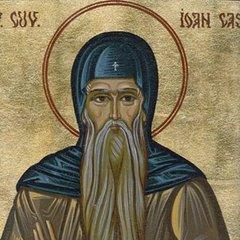
John Cassian
John Cassian

John Cassian (360-435 AD) was a prominent figure in early Christian history, known for his contributions to monasticism and theological thought. He spent his life primarily in Egypt, where he founded one of the first monasteries and became its abbot. Cassian is renowned for his deep understanding of monastic life and his influential writings on Christian doctrine. more

You May Also Like

“...if you wish to get pure air into your room, or if you go for a walk in the fresh air, think of the pure and of the unclean heart. Many of us like to have pure air in the room (and this is an excellent habit), or are fond of walking in the fresh air, but they do not even think of the necessity of the purity of the spirit or heart (of, so to say, spiritual air, the breath of life); and, living in the fresh air, they allow themselves to indulge in impure thoughts, impure movements of the heart, and even impurity of language, and most impure carnal actions.”

“...knowing God is the condition for the sanctification of a human being by God's assistance and according to His intention. Wherever God is, there He is always creating... He wants to create a new human being. To need God is to become new. And to know God is the crucial thing.”

“The Word of God makes use of poetic imagery when discussing... formless intelligences but... it does not do so for the sake of art, but as a concession to the nature of our own mind. It uses scriptural passages in an uplifting fashion as a way, provided for us from the first, to uplift our mind in a manner suitable to our nature.”

“...angels... are always being filled full of light, becoming ever more radiant and making blessed use of their natural ability to change. They dance for joy around the First Light, look continuously towards Him and are enlightened directly by Him, as they tirelessly sing the praises of the Fount of light and, being ministers of light, transmit illuminating grace to those lower beings who are being enlightened.”

“...though every thinking being longs for God, the First Cause, it is powerless... to grasp Him. Tired with the yearning it chafes at the bit and, careless of the cost, it tries a second tack. Either it looks at things visible and makes of these a god - a gross mistake, for what visible thing is more sublime, more godlike, than its observer... - or else it discovers God through the beauty and order of things seen, using sight as a guide to what transcends sight without losing God through the grandeur of what it sees.”

“No one seeing a beautifully elaborated lyre with its harmonious, orderly arrangement, and hearing the lyre's music will fail to form a notion of its craftsman-player, to recur to him in thought though ignorant of him by sight. In this way the creative power, which moves and safeguards its objects, is clear to us, though it be not grasped by the understanding. Anyone who refuses to progress this far in following instinctive proofs must be wanting in judgment. But still, whatever we imagined or figured to ourselves or reason delineated is not the reality of God.”