Quotessence
Home / Quotes / Quote by Mary Faustina Kowalska

Quote by Mary Faustina Kowalska

“O King of glory, though you hide your beauty, yet the eye of my soul rends the veil. I see the angelic choirs giving you honor without cease.”

Quote by Mary Faustina Kowalska

Author
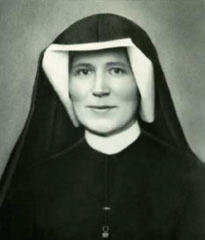
Mary Faustina Kowalska

Mary Faustina Kowalska, born on August 25, 1905, and died on October 5, 1938, was a Catholic saint from Poland. She was a mystic known for her devotion to the Sacred Heart of Jesus and her love for God. more

You May Also Like

“The American Indian is of the soil, whether it be the region of forests, plains, pueblos, or mesas. He fits into the landscape, for the hand that fashioned the continent also fashioned the man for his surroundings. He once grew as naturally as the wild sunflowers, he belongs just as the buffalo belonged.”

“The time will soon be here when my grandchild will long for the cry of a loon, the flash of a salmon, the whisper of spruce needles, or the screech of an eagle. But he will not make friends with any of these creatures and when his heart aches with longing, he will curse me. Have I done all to keep the air fresh? Have I cared enough about the water? Have I left the eagle to soar in freedom? Have I done everything I could to earn my grandchild's fondness?”

“I was standing on the highest mountain of them all, and round about beneath me was the whole hoop of the world. And while I stood there I saw more than I can tell and I understood more than I saw; for I was seeing in a sacred manner the shapes of all things in the spirit, and the shape of all shapes as they must live together like one being. And I saw that the sacred hoop of my people was one of many hoops that made one circle, wide as daylight and as starlight, and in the center grew one mighty flowering tree to shelter all children of one mother and one father. And I saw that it was holy.”

“Conversation was never begun at once, nor in a hurried manner. No one was quick with a question, no matter how important, and no one was pressed for an answer. A pause giving time for thought was the truly courteous way of beginning and conducting a conversation. Silence was meaningful with the Lakota, and his granting a space of silence to the speech-maker and his own moment of silence before talking was done in the practice of true politeness and regard for the rule that, "thought comes before speech."”

“The old Indian teaching was that is is wrong to tear loose from its place on the earth anything that may be growing there. It may be cut off, but it should not be uprooted. The trees and the grass have spirits. Whatever one of such growth may be destroyed by some good Indian, his act is done in sadness and with a prayer for forgiveness because of his necessities.”