Quotessence
Home / Quotes / Quote by Mark Twain

Quote by Mark Twain

“Mornings before daylight I slipped into cornfields and borrowed a watermelon, or a mushmelon, or a punkin, or some new corn, or things of that kind. Pap always said it warn’t no harm to borrow things if you was meaning to pay them back some time; but the widow said it warn’t anything but a soft name for stealing, and no decent body would do it.”

Quote by Mark Twain

Work

The Adventures of Huckleberry Finn

Mark Twain's renowned work explores themes of friendship, morality, and the human condition through the eyes of its young protagonist, Huckleberry Finn, as he navigates the complexities of society and the American South. more

Author
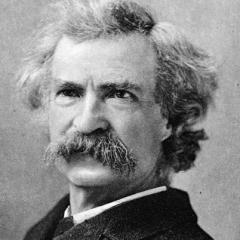
Mark Twain
Mark Twain

Mark Twain, born Samuel Langhorne Clemens, was a renowned American author and humorist in the 19th century. His works are characterized by humor, satire, and profound social insight, with notable novels such as 'The Adventures of Tom Sawyer' and 'The Adventures of Huckleberry Finn'. more

You May Also Like

“Goats' refusal of young blackbrush shoots, furthermore, is outright. They want nothing to do with it. Provenza pointed at his hand, then his arm and body, and said, "Every organ and every cell has receptors similar to what's in your nose and on your tongue." Creatures communicate within their environment the same way they communicate within their own bodies -- through chemical trigger substances that bind to receptors and produce responses. "It's all part of a feedback system," Provenza said, "that tells the body what's good and what isn't." Goats are not stupid after all. They don't bumble through the world eating what they were born to like. They experience need states, satisfaction, and delight along with aversions to strong a mere hint of something can make them turn away in disgust. Flavor is what nutrition feels like to a goat. If goats had a word for delicious, it would have two meanings. The first would be: I like this. The second would be: This is what my body needs. For goats, they are the same thing.”

“Resistence takes place on many planes. Occasionally it can be dramatic and public, but most of the decisions we are faced with are mundane and private. What to eat is a choice that we make several times a day, if we are lucky. The cumulative choices we make about food have profound implications. Food offers us many opportunities to resist the culture of mass marketing and commodification. Though consumer action can take many creative and powerful forms, we do not have to be reduced to the role of consumers selecting from seductive convenience items. We can merge appetite with activism and choose to involve ourselves in food as cocreators. (Page 27)”

“Flavor factories churn out chemical desire. We spray, squirt, and inject hundreds of millions of pounds of those chemicals on food every year, and then we find ourselves surprised and alarmed that people keep eating. We have become so talented at soaking our food in fakeness that the leading cause of preventable death - smoking - bears a troubling resemblance to the second leading cause of preventable death - obesity.”

“Humans look just like livestock now. We achieve a state of buttery plumpness before we've even reached sexual maturity. We experience powerful cravings for food that is slowly making us sick. We are...programmed to eat the wrong food. We aren't born calorie zombies, but that's what we have become.”

“...the question of portion size. When I ate Doritos or a Big Mac, I dept on eating and eating, and later experienced McRegret. So why when I ate a fourteen-week-old barred rock [heirloom breed chicken] or a grapefruit did I find it tremendously delicious and yet tremendously satisfying? If these foods tasted better, shouldn't I have just kept on gorging? Fred Provenza believes the difference comes down to what he calls "deep satiety." "Fundamentally," he told me, "eating too much is an inability to satiate." Wen food meets needs at "multiple levels," it provides a feeling of "completeness" and offers a satisfaction that's altogether different from being stuffed.”