Quotessence
Home / Quotes / Quote by John Burroughs

Quote by John Burroughs

“The poor old earth which has mothered us and nursed us we treat with scant respect. Our awe and veneration we reserve for the worlds we know not of. Our senses sell us out. The mud on our shoes disenchants us.”

Quote by John Burroughs

Work

The writings of John Burroughs

This collection includes a variety of works by John Burroughs, showcasing his deep engagement with the natural world and its role in shaping human experience. The essays range from reflections on nature and its beauty to discussions on the interconnectedness of all living things. Burroughs' writing is characterized by its lyrical prose and philosophical insights, offering readers a unique perspective on the natural world and its significance. more

Author
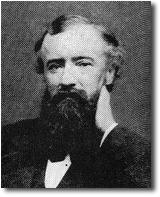
John Burroughs
John Burroughs

John Burroughs (April 3, 1837 – March 29, 1921) was an American essayist and naturalist, widely regarded as the father of American nature writing. Born in Roxbury, New York, he worked as a teacher and journalist before dedicating himself to observing and writing about nature. His works, such as Wake-Robin and Winter Sunshine, are celebrated for their vivid descriptions and philosophical depth. A close friend of poet Walt Whitman, Burroughs emphasized the spiritual connection between humans and the natural world. His writings influenced early conservation movements and continue to inspire readers today. more

You May Also Like

“The time has come when we cannot be so careless. Unless we do better, we may suffer through a stark emergency of the environment. We may create a hostile world: a world to bruise ourselves against; a world of sprawling cities, unplanned or badly planned; a world whose water is full of sludge, whose winds are full of soot; a world whose landscape has been totally neglected, stripped, marred, and wasted. All of this need not happen if we choose well, and particularly if we plan well and if we act well.”

“There is a growing threat to the environment, to the vegetation, animals, water and air. Sacred Scripture hands us the image of Cain who rejects his responsibility: 'Am I my brother's keeper?' The Bible shows the human person as his brother's keeper and the guardian of creation which has been entrusted to him.”

“There must be limits, somewhere, to the human footprint on this earth. When the whole of the world is reduced to nothing but human product, we will have lost the map that can show us how we got here, and can offer our spirits an answer when we ask why. Surely we are capable of declaring sacred some quarters that we dare not enter or possess.”

“We can be confident that action which is in accord with a few basic beliefs cannot be wrong and can at least testify to the values we will need to cultivate. These are the beliefs that the human race is a family that has inherited a place on the earth in common, that its members have an obligation to work toward sharing it so that none is deprived of the elementary needs for life, and that all have a responsibility to leave it undegraded for those who follow.”

“We can only live the changes we wish to see: we cannot think our way to humanity. Every one of us, every group, must become the model of that which we desire to create. We must break the obsolete social and economic systems that divide the world between the over-privileged and the under-privileged. Each of us, whether government leader or protester, business executive or worker, professor or student, share a common guilt.”

“We have failed...through our lack of responsible awareness...and thus added to suffering around the world. All of us are cripples-some physically, some mentally, some emotionally. We must, therefore, strive cooperatively to create a new world. There is no time left for destruction, for hatred, for anger. We must build, in hope and joy and celebration.”

“We do not have any respect, let alone reverence, for the world of nature because we do not have any respect, let alone reverence, for ourselves. It is because we cripple and mutilate ourselves that we cripple and mutilate everything else as well. Our contemporary crisis is really our own depravity writ large.”