“My doctrine means that I must identify myself with life, with everything that lives, that I must share the majesty of life in the presence of God. The sum-total of this life is God. .. Man is not at peace with himself until he has become like unto God. The endeavor to reach this state is the supreme, the only ambition worth having. And this is self-realisation. This self-realisation is the subject of the Gita, as it is of all scriptures... to be a real devotee is to realise oneself. Self-realisation is not something apart.”
Quote by Mahatma Gandhi
Author
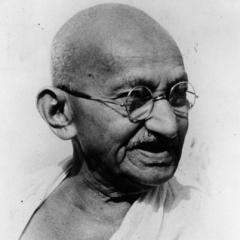
Mahatma Gandhi
A leader of the Indian independence movement, lawyer, politician, and social activist, Mahatma Gandhi is revered as the 'Father of the Nation'. He advocated for non-violence and unity between Hindus and Muslims, leading the Indian struggle for independence and profoundly influencing history both in India and around the world. more
You May Also Like
Source: Dilthey's Dream: Essays on Human Nature and Culture
“.. the voice of nature and experience seems plainly to oppose the selfish theory.”
Source: An enquiry concerning human understanding. A dissertation on the passions. An enquiry concerning the principles of morals. The natural history of religion
“It is still open for me, as well as you, to regulate my behavior, by my experience of past events.”
Source: THE PHILOSOPHICAL WORKS OF DAVID HUME.
Source: An Enquiry Concerning Human Understanding: Revision of Great Book
Source: An Enquiry Concerning the Principles of Morals
“If you can't describe what you are doing as a process, you don't know what you're doing.”
Source: An Enquiry Concerning the Principles of Morals: A Critical Edition
Source: An Enquiry Concerning the Principles of Morals