Quotessence
Home / Quotes / Quote by David Hume

Quote by David Hume

Work

An enquiry concerning human understanding. A dissertation on the passions. An enquiry concerning the principles of morals. The natural history of religion

This book is a compilation of four philosophical treatises that delve into the nature of human cognition, the role of emotions in human experience, the foundations of moral philosophy, and the historical and cultural aspects of religion. The works collectively offer a deep exploration of the human condition and the philosophical underpinnings of various aspects of human life. more

Author
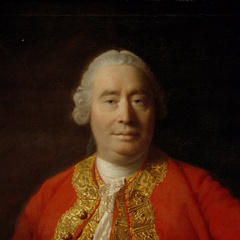
David Hume
David Hume

David Hume, born on May 7, 1711, in Edinburgh, Scotland, and died on August 25, 1776, was an outstanding philosopher, historian, and economist. Known for his contributions to empiricism and skepticism, his works have had a profound impact on subsequent philosophy, economics, and psychology. more

You May Also Like

“There has been a controversy started of late, much better worth examination, concerning the general foundation of Morals; whether they be derived from Reason, or from Sentiment; whether we attain the knowledge of them by a chain of argument and induction, or by an immediate feeling and finer internal sense; whether, like all sound judgement of truth and falsehood, they should be the same to every rational intelligent being; or whether, like the perception of beauty and deformity, they be founded entirely on the particular fabric and constitution of the human species.”

“Truth is disputable; not taste: what exists in the nature of things is the standard of our judgement; what each man feels within himself is the standard of sentiment. Propositions in geometry may be proved, systems in physics may be controverted; but the harmony of verse, the tenderness of passion, the brilliancy of wit, must give immediate pleasure. No man reasons concerning another's beauty; but frequently concerning the justice or injustice of his actions.”

“These arguments on each side (and many more might be produced) are so plausible, that I am apt to suspect, they may, the one as well as the other, be solid and satisfactory, and that reason and sentiment concur in almost all moral determinations and conclusions.”

“.. that which renders morality an active principle and constitutes virtue our happiness, and vice our misery: it is probable, I say, that this final sentence depends on some internal sense or feeling, which nature has made universal in the whole species.”

“But in many orders of beauty, particularly those of the finer arts, it is requisite to employ much reasoning, in order to feel the proper sentiment; and a false relish may frequently be corrected by argument and reflection. There are just grounds to conclude, that moral beauty partakes of this latter species, and demands the assistance of our intellectual faculties, in order to give it a suitable influence on the human mind.”

“We may observe that, in displaying the praises of any humane, beneficent man, there is one circumstance which never fails to be amply insisted on, namely, the happiness and satisfaction, derived to society from his intercourse and good offices.”

“In all determinations of morality, this circumstance of public utility is ever principally in view; and wherever disputes arise, either in philosophy or common life, concerning the bounds of duty, the questions cannot, by any means, be decided with greater certainty, than by ascertaining, on any side, the true interests of mankind. If any false opinion, embraced from appearances, has been found to prevail; as soon as farther experience and sounder reasoning have given us juster notions of human affairs, we retract our first sentiment, and adjust anew the boundaries of moral good and evil.”

“He sees such a desperate rapaciousness prevail; such a disregard to equity, such contempt of order, such stupid blindness to future consequences, as must immediately have the most tragical conclusion, and most terminate in destruction to the greater number, and in a total dissolution of society to the rest.”