Quotessence
Home / Quotes / Quote by Stefan Zweig

Quote by Stefan Zweig

“No, no puedo decirle lo espeluznante que me resultó mirar con él esos cien o doscientos pedazos de papel vacíos o reproducciones en mal estado, pero que, en la memoria de ese hombre en su trágica ignorancia, eran tan increíblemente reales que sin error celebraba y describía cada uno de ellos en una sucesión intachable. Aquella colección invisible que hacía tiempo debía de haber sido esparcida a los cuatro vientos, para ese ciego, para esa persona engañada de manera conmovedora, todavía estaba allí, inmutable, y la pasión que mostraba al verla era tan abrumadora que casi comencé a creer en ella.”

Quote by Stefan Zweig

Work

Sueños olvidados y otros relatos

Browse quotes and source details for this work. more

Author
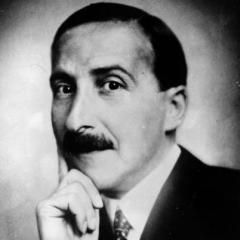
Stefan Zweig
Stefan Zweig

Stefan Zweig, born on November 28, 1881 in Vienna, was an Austrian novelist, playwright, and biographer. Known for his profound psychological insights and unique narrative style, he is a significant figure in European literature at the beginning of the 20th century. more

You May Also Like

“[Refiriéndose al Louvre] Si alguien me pregunta si encuentro bello el palacio que veo ante mí, puedo decir: no me gustan ese tipo de cosas [...]; puedo, aún más, reprochar en buen estilo rousseauniano la vanidad de los grandes, que emplean el sudor del pueblo en cosas tan superfluas [...]. Se me puede conceder y aprobar todo esto; pero no es de eso de lo que trata aquí [...]. Para hacer de juez en materia de gusto, uno no debe estar en lo más mínimo predispuesto en favor de la existencia de la cosa, sino ser a este respecto por completo indiferente.”

“To the ordinary cultivated student of civilization the genesis of a Church is of little interest, and at all events we must not confound the history of a Church with its spiritual meaning. To the ordinary observer the English Church in history means Hooker and Jeremy Taylor — and should mean Andrewes also: it means George Herbert, and it means the churches of Christopher Wren. This is not an error: a Church is to be judged by its intellectual fruits, by its influence on the sensibility of the most sensitive and on the intellect of the most intelligent, and it must be made real to the eye by monuments of artistic merit. The English Church has no literary monument equal to that of Dante, no intellectual monument equal to that of St. Thomas, no devotional monument equal to that of St. John of the Cross, no building so beautiful as the Cathedral of Modena or the basilica of St. Zeno in Verona. But there are those for whom the City churches are as precious as any of the four hundred odd churches in Rome which are in no danger of demolition, and for whom St. Paul's, in comparison with St. Peter's, is not lacking in decency; and the English devotional verse of the seventeenth century — admitting the one difficult case of conversion, that of Crashaw — finer than that of any other country or religion at the time.”

“Sketchbooks are fascinating; they are a window into an artist's or designer's mind, revealing their unique way of looking at or thinking about the world. However, the sketchbook has become a much fetishised object featured in countless books, blog's and social-media accounts showcasing stylised and curated examples that few can emulate. It is no wonder that at some point on the Foundation course every student articulates anxiety or frustration over their own sketchbook: it's too big, too small, too messy, too contrived, I can't draw, what's it for? So why do we work with a sketchbook and what is it really for?”

“Lazy looking is not really looking at all. It is when we guess or approximate things. When you really interrogate what you are looking at and challenge yourself to use and invent a wide range of approaches to capturing what you see, your drawing's will start to reflect your unique way of looking.”

“This is the intangibility of genius--to create work that transfers from the canvas, the page, or the instrument into the heart of another person, arousing a longing for beauty and an end to sadness. This was what Vincent wanted to create--art that would transfer from his easel into someone else's soul to work as a balm of healing for the broken.”