“The capacity for imaginative reflex, for moral risk in any human being is not limitless; on the contrary, it can be rapidly absorbed by fictions, and thus the cry in the poem may come to sound louder, more urgent, more real than the cry in the street outside. The death in the novel may move us more potently than the death in the next room. Thus there may be a covert, betraying link between the cultivation of aesthetic response and the potential of personal inhumanity.”
Quote by George Steiner
Work
George Steiner: A Reader
This book offers a diverse selection of George Steiner's writings, showcasing his intellectual breadth and depth across various disciplines including philosophy, literature, and cultural criticism. more
Author
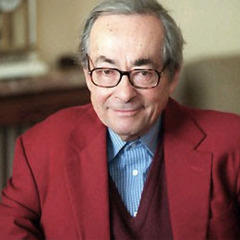
George Steiner
George Steiner is an esteemed literary critic, born on April 23, 1929. His work spans a wide range of literary fields, including novels, poetry, drama, and philosophy. more
You May Also Like
Source: No Passion Spent
Source: Real Presences: Is There Anything in What We Say?
Source: Real Presences: Is There Anything in What We Say?
“The immense majority of human biographies are a gray transit between domestic spasm and oblivion.”
Source: In Bluebeard's Castle: Some Notes Towards the Redefinition of Culture
Source: A Long Saturday: Conversations