Quotessence
Home / Quotes / Quote by Marina Warner

Quote by Marina Warner

“Mythographer was suggested by the man who made my website, actually. I do write a lot about myth and I do feel it's a bit pompous to state it that way, but it does distinguish me from other writers. When it was first on the web, people began to use it in an ironical and satirical way. Now, however, people tend to use it straight.”

Quote by Marina Warner

Author
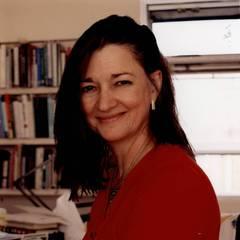
Marina Warner
Marina Warner

Marina Warner is a renowned British novelist known for her unique literary style and in-depth research into mythology and folklore. Her works often blend history, culture, and personal narrative, exploring themes of gender, identity, and memory. more

You May Also Like

“I do think that this represents a kind of shift towards myth, a recovery of myth, largely through the popularity of writers like Philip Pullman. Somehow myths have returned as a serious subject. It used to be scorned...really scorned. It was part of a nursery tradition, and it was also rather tainted - but not in an immovable way - by the association with right-wing ideologies after the World Wars.”

“I have always argued that we can't live by or be made to exist outside of mythology, and that every group and nation has, possibly unacknowledged to themselves, some myths by which they live. It remains important to revisit them, understand them and possibly retell them - or at least own up to them - and then it becomes possible to move something. If it's obscure or invisible to you, you can't budge those understandings.”

“I always have done work on mythic relations since I started writing. I really want to be a novelist, or at least a writer of imaginative work... I do try to make my critical studies imaginative and try to write them in ways that are more like literature than philosophy, but I have disappointed myself because I am still so wedded to criticism.”

“Though it's marvelously entertaining, and I had fantastic fun writing the book, it's not terribly easily, the material, and it's not all that familiar...although we think it is familiar. The processes of the wonderful narratives are very intricate. It's about the charm - the spellbinding charm - of ingenuity, and it's not so easy to remember the plots or the structure or even the names.”

“True to their history, the English are very domineering and have manipulated it in different ways. I wouldn't say that there was an original, but there is a lot of expurgation in some of the Victorian translations, and there's a lot of additional salacious nonsense in some of them, too. I also like the early French one, much-derided for being fanciful but which is actually very elegantly done. It's very big, very capacious.”

“Although the stories are very present in my book, and very present in my mind, what I was most interested in was the question of why it had attracted such a following in the 18th Century. It's less mysterious that it attracted a following in the Romantic period, and in the 19th Century, but the early 18th Century when the Rationalists fell in love with it...that was mysterious. What I wanted to look at was the forms of enchantment.”

“I consider it as a foreshadowing of modernity in many different respects, and the consistency of character is interesting to the emerging modern psychology. The emphasis on dream knowledge relates quite deeply to psychoanalysis, although I suppose psychoanalysis wouldn't like to say that... Freud was always saying he was a scientist.”