Quotessence
Home / Quotes / Quote by Richard Matheson

Quote by Richard Matheson

“It was a high ceilinged room with tall, large-panes windows. Apart from the doorway was the desk where book had been checked out in days when books were still being checked out. He stood there for a moment looking around the silent room, shaking his head slowly. All these books, he thought, the residue of a planet's intellect, the scrapings of futile minds, the leftovers, the potpourri of artifacts that had no power to save men from perishing.”

Quote by Richard Matheson

Work

I Am Legend

In this classic science fiction tale, the protagonist, Robert Neville, is the last human in a world where vampires have taken over. Living in a fortified home, Neville conducts experiments to find a cure for the virus that has turned humans into vampires. The novel delves into themes of isolation, survival, and the human condition. more
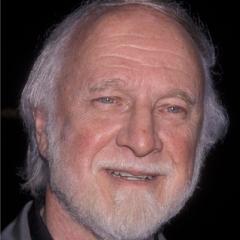
Author

Richard Matheson
Richard Matheson

Richard Matheson was an American author renowned for his science fiction and horror novels. His works spanned a variety of literary genres, including novels, short stories, and television scripts. Matheson's writing career began in the mid-20th century, and he rose to prominence in the science fiction and horror literary communities. Many of his works have been adapted into films and television shows, such as 'The Night of the Living Dead' and 'The Shrinking Man'. His novel 'The Night of the Living Dead' was first published in 1962 and later adapted into the eponymous film, achieving great success. His short story collection 'The Shrinking Man' was also adapted into a film, further solidifying his reputation. more

You May Also Like

“Holly steps back. Being warned about a ghost and seeing him are not the same. 'What did they do to you?' Some of the Anchorites laugh. Hugo looks back at his long-ago lover. 'They'-he looks about the Chapel-'cured me. They cured me of a terrible wasting disease called mortality. There's a lot of it about. The young hold out for a time, but eventually even the hardiest patient gets reduced to a desiccated embryo, a Strudlebug...a veined, scrawny, dribbling...bone clock, whose face betrays how very, very little time they have left.”

“The age-old, seemingly inexorable process whereby diseases acquire meanings (by coming to stand for the deepest fears) and inflict stigma is always worth challenging, and it does seem to have more limited credibility in the modern world, among people willing to be modern - the process is under surveillance now. With this illness, one that elicits so much guilt and shame, the effort to detach it from these meanings, these metaphors, seems particularly liberating, even consoling. But the metaphors cannot be distanced just by abstaining from them. They have to be exposed, criticized, belabored, used up.”

“...there is no real person whose embodiment plays no role in meaning, whose meaning is purely objective and defined by the external world, and whose language can fit the external world with no significant role played by mind, brain, or body. Because our conceptual systems grow out of our bodies, meaning is grounded in and through our bodies. Because a vast range of our concepts are metaphorical, meaning is not entirely literal and the classical correspondence theory of truth is false.”

“No more light answers. Let our officers Have note what we purpose. I shall break The cause of our expedience to the Queen And get her leave to part. For not alone The death of Fulvia, with more urgent touches, Do strongly speak to us, but the letters too Of many our contriving friends in Rome Petition us at home. Sextus Pompeius Hath given the dare to Caesar and commands The empire of the sea. Our slippery people, Whose love is never linked to the deserver Till his deserts are past, begin to throw Pompey the Great and all his dignities Upon his son, who - high in name and power, Higher than both in blood and life - stands up For the main soldier; whose quality, going on, The sides o' th' world may danger. Much is breeding Which, like the courser's hair, hath yet but life And not a serpent's poison.”

“Speech is the pen and the sword of humankind and it is the foundation of their kingdom. Wherever the flag of speech waves, the most powerful armies are. defeated and scattered. In the arenas in which speech shouts out, the sounds of cannon balls become like the buzzing of bees. from behind the battlements on which the banner of speech has been raised, the sound of its drums are heard. In the precincts where its march reverberates, kings shake in their boots. The Master of Speech smashed to pieces many insurmountable walls, in the face of which Alexander the Great, Napoleon, and many others despaired or retread; and the pen of Speech, imparting and compliance, was saluted and praised.”