Quotessence
Home / Quotes / Quote by Martin Amis

Quote by Martin Amis

“Steven Pinker says, the invention of printing and the widespread appearance of fiction - this taught empathy. If you read a novel, you're in someone else's head, in three, five different people's heads. Suddenly, the principle of "Don't do anything to anyone that you wouldn't want done to you" becomes real in people's minds. That's a fantastic achievement if fiction is indeed partly responsible for it. That's a great thing to be a part of. In the end, then, I don't know if writers have legislated, but they have civilized.”

Quote by Martin Amis

Author
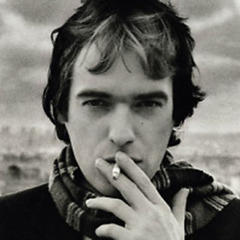
Martin Amis
Martin Amis

Martin Amis is a British novelist known for his satirical and darkly humorous writing. His works often explore the moral dilemmas of modern society and the complexities of individual identity. Born on August 25, 1949, Amis is considered an important figure in British literature. more

You May Also Like

“I didn't fit into the Christian college my parents sent me to. I felt tarnished by tragedy, between my brother's death and Escuela Caribe, and everyone else seemed so carefree and happy and praising God. I couldn't stand happy people for a long time, and was plagued by chronic migraines and stomach aches. I'd say between age thirteen and twenty-three was the most miserable time of my life. I wrote Jesus Land because I wanted there to be a record of David's life. I was surprised that so many people read it, and felt moved by it.”

“As kids, my brother David and I longed for acceptance. We were desperate to belong. We would have been thrilled to see the pews of Jones's church in San Francisco, with blacks and whites sitting side by side. And Jim Jones's sermons on social justice and equality would have had much greater appeal to us than the soporific morality tales we were accustomed to hearing. Jones promised real racial equality. He promised to create a truly equal community in the jungle in Guyana.”

“I was working on a satirical novel about a charismatic preacher who takes over a small Indiana town. Then I remembered Jim Jones was from Indiana and Googled him. I learned that the FBI had recently released all the documents that agents collected from Jonestown after the massacre - over 50,000 pieces of paper and almost 1,000 audio tapes. I started reading the files and couldn't tear myself away; I find "true" stories inherently more powerful than fiction.”

“Jim Jones started out as a civil rights crusader in Indianapolis. As a young preacher in the mid-50s, he used members of his congregation to integrate lunch counters and all-white churches in rich neighborhoods; they'd just march in and sit down at the pews and see what happened. Often they were received with racist insults, and once with a bomb threat. But the fact that you had this charismatic, white man, aggressively promoting racial equality, was a huge draw for African Americans, many of whom felt the Civil Rights Movement had stalled by the late 60s.”