Quotessence
Home / Quotes / Quote by J. B. Bury

Quote by J. B. Bury

“The Macedonian people and their kings were of Greek stock, as their traditions and the scanty remains of their language combine to testify.”

Quote by J. B. Bury

Author
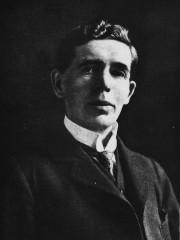
J. B. Bury
J. B. Bury

J. B. Bury, a renowned British historian, was born on October 16, 1861, and died on June 1, 1927. He is known for his extensive research on medieval and Byzantine history. more

You May Also Like

“The Escalation programmers come from a completely different background, and the codebase is all STL this, boost that, fill-up-the-property list, dispatch the event, and delegate that. I had been harboring some suspicions that our big codebases might benefit from the application of some more of the various “modern” C++ design patterns, despite seeing other large game codebases suffer under them. I have since recanted that suspicion.”

“Today, no one would dispute that information technology has become the backbone of commerce. It underpins the operations of individual companies, ties together far-flung supply chains, and, increasingly, links businesses to the customers they serve. Hardly a dollar or a euro changes hands anymore without the aid of computer systems.”

“In the long run, though, the greatest IT risk facing most companies is more prosaic than a catastrophe. It is, simply, overspending. IT may be a commodity, and its costs may fall rapidly enough to ensure that any new capabilities are quickly shared, but the very fact that it is entwined with so many business functions means that it will continue to consume a large portion of corporate spending.”

“By putting the means of production into the hands of the masses but withholding from those same masses any ownership over the product of their work, Web 2.0 provides an incredibly efficient mechanism to harvest the economic value of the free labor provided by the very, very many and concentrate it into the hands of the very, very few.”

“Utilitarianism had found [in Samuel Smiles' Self-Help] its portrait gallery of heroes, inscribed with a vigorous exhortation to all men to strive in their image; this philistine romanticism established the bourgeois hero-prototype the penniless office-boy who works his way to economic fortune and this wins his way into the mercantile plutocracy.”

“The egoist ... destroys the universal importance accorded to moral law by showing that life independent of it is possible. Secondly, and even more intolerably to the pious, he manages to do so with shameless enjoyment.”

“Stirner and Nietzsche ... reveal how prone morality is to being used as a means of rationalization, a cloak for concealing violent and brutish passions, and making their sadistic expression a virtue.”