Quotessence
Home / Quotes / Quote by Aristotle

Quote by Aristotle

“The life of theoretical philosophy is the best and happiest a man can lead. Few men are capable of it and then only intermittently. For the rest there is a second-best way of life, that of moral virtue and practical wisdom.”

Quote by Aristotle

Author
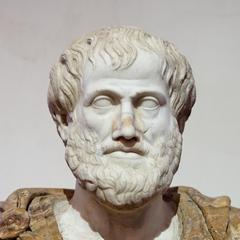
Aristotle
Aristotle

Aristotle, a renowned Greek philosopher, is one of the founders of Western philosophy. His thoughts covered a wide range of fields, including ethics, logic, politics, and had a profound impact on the world. more

You May Also Like

“We must not conceal from ourselves that no improvement in the present depressing situation is possible without a severe struggle; for the handful of those who are really determined to do something is minute in comparison with the mass of the lukewarm and the misguided. And those who have an interest in keeping the machinery of war going are a very powerful body; they will stop at nothing to make public opinion subservient to their murderous ends.”

“When a mathematician engaged in investigating physical actions and results has arrived at his own conclusions, may they not be expressed in common language as fully, clearly, and definitely as in mathematical formulae? If so, would it not be a great boon to such as well to express them so -- translating them out of their hieroglyphics that we might also work upon them by experiment?”

“... if you insist that the inference is made by a chain of reasoning, I desire you to produce that reasoning. The connection between the two is not intuitive. There is required a medium, which may enable the mind to draw such an inference, if indeed it be drawn by reasoning and argument. What that medium is, I must confess, passes my comprehension; and it is incumbent on those to produce it, who assert that it really exists, and is the origin of all our conclusions concerning matter of fact.”

“..all arguments concerning existence are founded on the relation of cause and effect; that our knowledge of that relation is derived entirely from experience; and all our experimental conclusions proceed upon the supposition that the future will be conformable to the past. .... Without the influence of custom, we should be entirely ignorant of every matter of fact beyond what is immediately present to the memory and senses.”

“And as this is the obvious appearance of things, it must be admitted, till some hypothesis be discovered, which by penetrating deeper into human nature, may prove the former affections to be nothing but modifications of the latter. All attempts of this kind have hitherto proved fruitless, and seem to have proceeded entirely from that love of simplicity which has been the source of much false reasoning in philosophy.”

“The difference between a man who is led by opinion or emotion and one who is led by reason. The former, whether he will or not, performs things of which he is entirely ignorant; the latter is subordinate to no one, and only does those things which he knows to be of primary importance in his life, and which on that account he desires the most; and therefore I call the former a slave, but the latter free.”